
SA-50 vs SA-60: Fiber Grade TiO₂ for Whitening or Matting
SA-50 and SA-60 are both fiber grade titanium dioxide grades, but they are specified for different jobs on a spinning line. SA-50 is the whitening grade for polyester: it is dispersed in ethylene glycol and dosed into PET polymerization or chip systems. SA-60 is the matting grade for viscose and acrylic, added to an aqueous spin dope to reduce luster, where the pigment's soluble ionic load — expressed as conductivity — is part of the grade specification rather than an afterthought.
That job split produces the decision this guide works from. Whitening a polyester fiber points to SA-50. Matting a viscose or acrylic fiber under a stated conductivity ceiling points to SA-60. Swapping one for the other is a qualification project with defined tests and an approved shade standard, not a line-item substitution on a purchase order.
Why a whitening grade and a matting grade cannot be judged on the same numbers
In polyester, titanium dioxide works inside the polymer. The pigment scatters light back out of the fiber so a white or pale-shade fabric reads brighter and more opaque. Because the pigment sits within the polymer matrix, its dispersion state decides whether the result is uniform: an agglomerate that survives filtration becomes a visible speck, and poor dispersion raises filter and spinneret pressure before it ever shows up as a shade complaint. A whitening grade therefore has to survive glycol batching, conveying and polymerization temperature without losing its surface treatment or forming aggregates.
Matting in viscose and acrylic uses the same physics in the opposite direction. The target is a controlled reduction of surface gloss, so the fiber looks dull rather than shiny, and the add-on level is tuned to a semi-dull or full-dull specification. What changes the purchasing criteria is the medium: the dope is an aqueous, ionic system, so the soluble ion content the pigment brings in matters as much as its particle behavior. That is why the SA-60 datasheet carries a conductivity ceiling of ≤120 μS/cm while the SA-50 datasheet is built around ethylene glycol dispersion instead.
Both jobs share one non-negotiable requirement: consistency. A whitening grade that drifts between lots forces shade re-approval and re-dosing. A matting grade that drifts forces dope adjustments and, in a wet-spinning line, sends operators hunting for a bath problem that is really an incoming-material problem.
SA-50 and SA-60: the grade data, side by side
The table below uses only the grade limits supplied for this comparison. It is a specification comparison, not a ranking: the higher or tighter number is not automatically the better purchase, because the two grades are dosed into different systems against different acceptance standards.
| Specification | SA-50 | SA-60 |
|---|---|---|
| Primary fiber job | Whitening in polyester (PET) | Matting in viscose and acrylic |
| TiO₂ content | ≥98.0% | ≥97.0% |
| Whiteness L | 96.7–98.2 (controlled window) | ≥96.5 (floor) |
| Hue b | ≤0.0 | ≤0.5 |
| Conductivity | Not stated in the grade data used for this comparison | ≤120 μS/cm |
| Dispersion route | Ethylene glycol (EG) dispersion; hydrolysis resistance | Not stated in the grade data used for this comparison |
| Surface technology | Polyester-specific organic coating, refined dry modification | Not stated in the grade data used for this comparison |
| Release regime | 100% pre-shipment testing | 100% pre-shipment testing |
Two rows in that table do the most work in a real decision. The conductivity row is where the grades separate for wet-spinning buyers, and it is specified on one side only. The dispersion row is where they separate for polyester buyers, and it is also specified on one side only. Neither blank is a defect in the grade; both are evidence that the grades were designed against different process environments.
Reading the limits: content, L, b and conductivity
TiO₂ content: ≥98.0% versus ≥97.0%
A one-point content difference does not make one grade stronger than the other. It changes how much pigment mass delivers a given optical effect, which is a dosing question. Because the two grades go into different systems at different target levels, the useful check is whether your recipe was calculated on the number printed on the grade sheet you are buying. Moving a polyester recipe from a 98.0% grade to a 97.0% grade without recalculating the let-down shifts pigment load and shade at the same time — and the operator will usually see the shade change before anyone reviews the dosing sheet.
Whiteness L: a window versus a floor
SA-50 is held inside 96.7–98.2, a band with both a floor and a ceiling. A band matters when the output is judged on appearance, because it narrows lot-to-lot variation in a whitening job where several lots feed one shade standard. SA-60 is specified as a floor of ≥96.5: the requirement is that the matting pigment is light enough not to dull the dope beyond the intended matting level. In a matting job, brightness is not a score to maximize; the matting level is set by add-on, and a pigment specified far above the floor does not by itself produce a better dull fiber.
Hue b: ≤0.0 versus ≤0.5
The b value positions the pigment on the yellow–blue axis. SA-50 at ≤0.0 sits at neutral or slightly on the blue side, which is the direction a white or pale polyester fabric usually wants. SA-60 permits ≤0.5, a slightly warmer tolerance. On a white polyester fabric a few tenths of a b unit can be visible to a shade panel; on a matted viscose or acrylic fiber, where the target is reduced luster rather than a bright white, that wider tolerance is normally acceptable — provided the customer's shade standard was approved against a lot that sat inside the tolerance. When a white polyester program moves to a grade with a wider b window, the risk is not the pigment's quality but a shade that no longer matches an approved reference.
Conductivity ≤120 μS/cm: a process control, not a purity badge
Conductivity reflects the soluble ionic content a pigment introduces into an aqueous system. Viscose and acrylic wet spinning run through ionic coagulation and regeneration baths, where the balance of that bath governs how the fiber forms. A pigment carrying a high soluble-salt load can shift that balance and disturb fiber formation, so a conductivity ceiling is a process-control limit aimed at keeping the bath inside its window. SA-60 carries ≤120 μS/cm. SA-50 is not specified against that ceiling in the data used for this comparison — which is the single most important reason the two grades cannot be treated as interchangeable in a wet-spinning dope.
What SA-50's specification is actually protecting in a PET line
SA-50's defining property for polyester buyers is not its whiteness number but its compatibility with the polyester route. The grade uses a polyester-specific organic coating applied with refined dry modification technology, and it is compatible with both ethylene glycol and polyester resin. That combination allows it to disperse rapidly without a pre-infiltration step, which removes a wetting stage from glycol batching and reduces the residue that has to be cleaned out of lines and tanks.
The second protection is at the polymer. SA-50 is specified to hold stable PET viscosity without black spots or crystal points during polymerization. Those two defect classes are the usual visible cost of undispersed pigment: an agglomerate that passes filtration leaves a dark speck in the fiber, while unstable dispersion shows up first as pressure rise and then as a viscosity drift that operators chase with temperature adjustments. A grade that is well dispersed at the batching stage is, in effect, protecting the spinneret and the filter as well as the shade.
The third protection is hydrolysis resistance, which matters for handling rather than for the reaction itself. A coated pigment that meets moisture in transit or in a humid warehouse can agglomerate before it is ever dosed. Sealed packaging and a warehouse held below 65% relative humidity are part of the grade's performance envelope, not optional housekeeping.
The fourth is the optical window. L 96.7–98.2 with b ≤0.0 gives a defined whitening target for pure-white, light-grey and pale-shade programs, so a shade panel can be approved against a band rather than against a single lucky lot.
What SA-60's specification is actually protecting in viscose and acrylic
SA-60 answers a different question: how to reduce luster repeatably in a wet-spun dope without adding ionic load. Its specification is built around two controls — an optical floor and a conductivity ceiling — plus a pigment content that is adequate for matting rather than aimed at a whitening duty.
L ≥96.5 and b ≤0.5 define the optical envelope. In practice this means the pigment will not grey or visibly shift the dope beyond the intended matting effect, while leaving room for the natural variation that a wet-spinning process already generates in the finished fiber. TiO₂ ≥97.0% sets the pigment load that the matting add-on calculation is based on. Conductivity ≤120 μS/cm is the control a polyester buyer would never think to ask for, and it is the one that matters most in this application: it limits the soluble ionic burden the pigment places on the spin bath.
Matting level itself is a dosing decision. Semi-dull and full-dull targets are reached by adjusting pigment add-on against the dope, so what the grade has to deliver is predictability — consistent content, consistent ionic load and consistent optical floor — rather than the highest available purity number. Where one site runs both polyester and viscose, the two grades also have to be kept physically separate: separate storage, separate feeding equipment and separate lot records, because a cross-contamination event will look exactly like a grade failure.
Substitution risk: SA-60 into polyester, SA-50 into wet spinning
Direction one: SA-60 used in a PET whitening job
The unverified item here is dispersion in ethylene glycol and behavior at polymerization temperature. SA-50's rapid-dispersion claim is tied to a glycol-compatible organic coating; SA-60's grade data does not state an EG dispersion route, and it does not state hydrolysis resistance. Run blind, the failure modes to expect are precisely the ones SA-50 is specified against: agglomerates surviving filtration as black spots and crystal points, filter and spinneret pressure rise, and viscosity fluctuation that takes a shift to diagnose. There is a shade risk as well. Replacing an L 96.7–98.2 / b ≤0.0 grade with one specified at L ≥96.5 / b ≤0.5 can move an approved white out of tolerance even when every incoming test passes its own limit, because the limits themselves are different.
Direction two: SA-50 used in a viscose or acrylic dope
Here the missing number is conductivity. SA-50 is not specified against a conductivity ceiling in the data used for this comparison, so a buyer cannot assume it meets ≤120 μS/cm. In a wet-spinning bath that is the parameter most likely to cause an expensive and hard-to-trace problem: bath chemistry drift, inconsistent coagulation, and fiber properties that move without an obvious mechanical cause. The second issue is that SA-50's coating is engineered for glycol and polyester resin; aqueous dope behavior is not established by that evidence. The third is commercial: the tighter optical window and the whitening specification are being paid for and not used, which makes the substitution look cheaper than it is only until the first downgraded lot.
The part that is easy to underestimate
A grade substitution usually looks inexpensive on the invoice and expensive at qualification: laboratory work, a pilot run, customer shade re-approval, split inventory while both grades sit in the warehouse, and the cost of a lot that has to be downgraded or reworked. Neither direction should be attempted as a same-specification swap. Treated as a new grade introduction, with the tests below, either direction can be evaluated honestly.
Acceptance criteria and a trial design that gives a clean answer
Define the pass/fail criteria before the first bag is opened, and write them into the trial plan so the result is a decision rather than an opinion.
- Lot documentation. Require a certificate of analysis per lot covering TiO₂ content, L, b, conductivity where specified, moisture and residue, released under 100% pre-shipment testing rather than by sampling. The certificate should be traceable to the lot number on the bag.
- Content by a named method. In China, GB/T 37632-2019 sets out the test method for titanium dioxide content in man-made fibers. Naming a method in the purchase specification is what stops a buyer and a supplier from reporting different numbers for the same property.
- Optical check on the same instrument. Measure L and b using the instrument, sample preparation and calibration your current grade was qualified on. A number without its method is not an acceptance criterion.
- Dispersion check for polyester. For an SA-50 trial, confirm ethylene glycol dispersion behavior and monitor filter and spinneret pressure across a defined run, with a defect count on the finished fiber.
- Conductivity check for wet spinning. For an SA-60 trial, verify aqueous slurry conductivity against the ≤120 μS/cm ceiling before the dope is made, not after.
- Retained samples. Keep a sealed reference sample of every lot for the duration of the qualification, so a later dispute can be tested rather than argued.
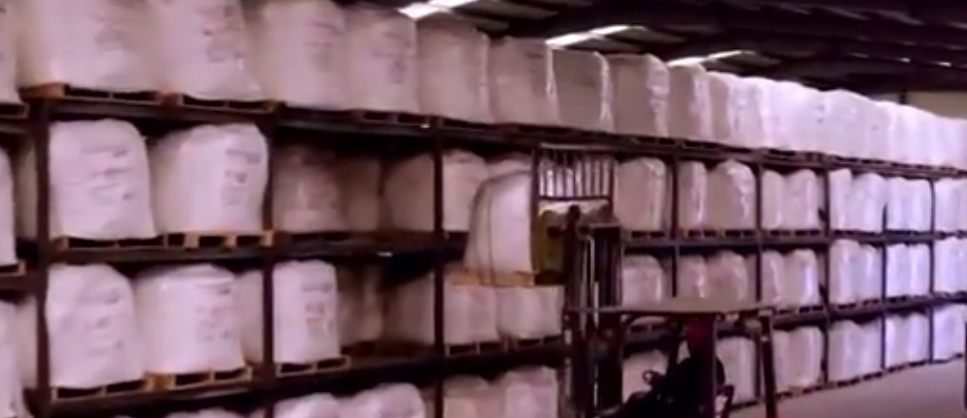
Design the trial around the smallest quantity that can run a representative window — 1 MT is enough for a controlled evaluation — and run the first pass at the current dose before changing anything. Record baseline filter pressure, spinneret pressure, break rate and shade beforehand, otherwise the comparison has no reference point. Route the trial lot through the same conveying, dosing and filtration path as production: a clean lab line will hide exactly the agglomeration behavior the trial exists to find.
MOQ, lead time and packaging: the facts that decide whether a trial happens
Technical fit decides whether a grade can run; order mechanics decide whether it can be tested at all. The grades compared here are supplied by Orient International Holding Shanghai Foreign Trade Co., Ltd., a state-owned foreign trade enterprise founded in 1988 with an annual capacity of 16,000 MT for titanium dioxide and related raw materials, a 700,000 m² production base, a 25-engineer technical team and export sales to Korea, Japan, the EU, North America, South America, South East Asia, the Middle East and India.
Three supplied facts make a grade trial practical rather than theoretical. Minimum order quantity is flexible from 1 MT, so a qualification lot does not require a container commitment. In the supplier's own comparison against European inorganic-coated imports, delivery times are reduced by more than 50%, which shortens the re-order cycle and the capital tied up in transit stock. Annual capacity of 16,000 MT means a trial that succeeds can be scaled without changing supplier — the usual reason buyers hesitate to trial a second grade is the fear of qualifying something that cannot then be supplied in volume.
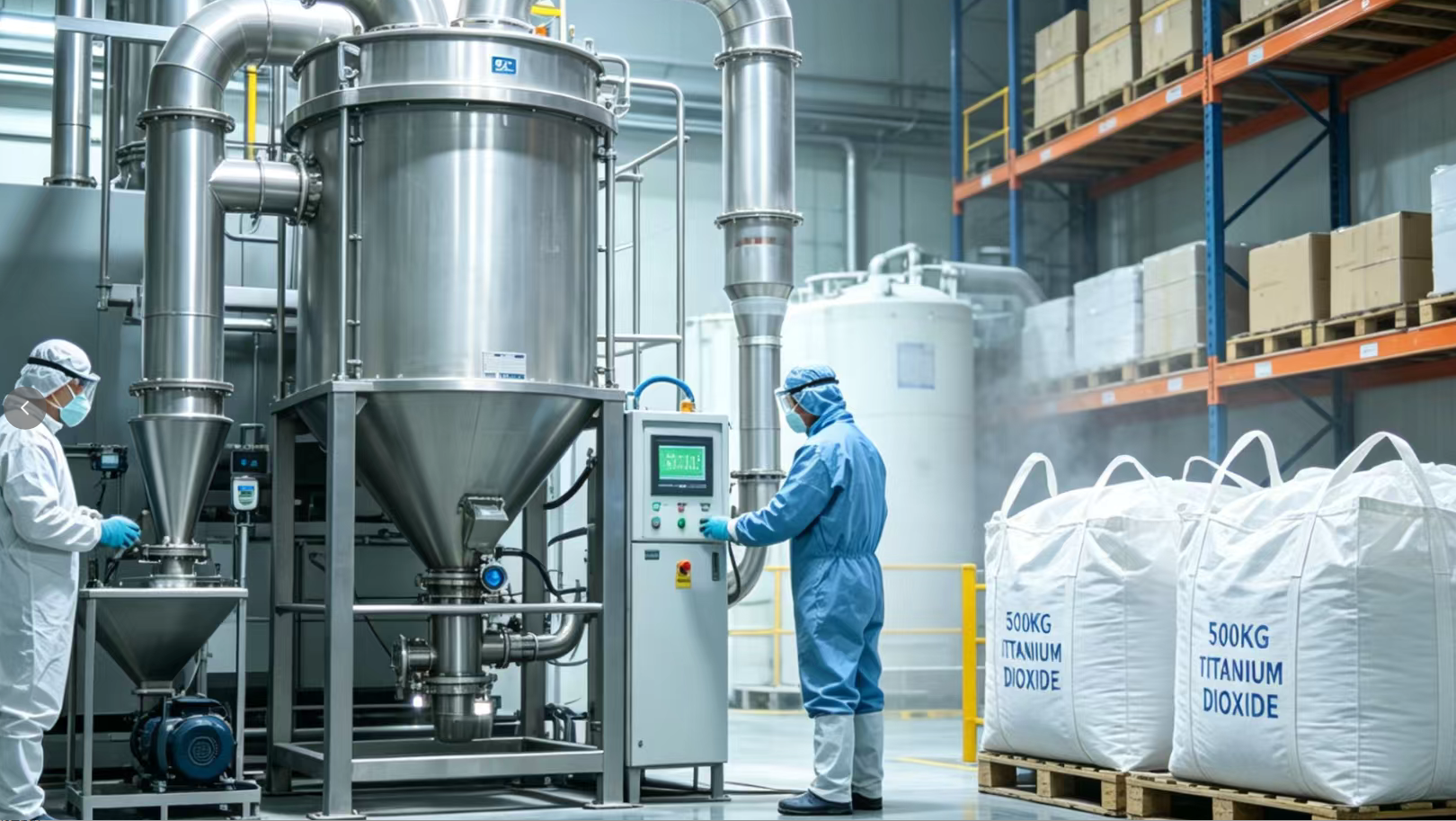
Packaging is supplied in 25 kg bags and 500 kg jumbo bags, both sealed; the warehouse should be held below 65% relative humidity and feeding should be enclosed to limit dust exposure and moisture pick-up. The purchase order for either grade should name the grade designation, the full specification limits rather than the phrase "fiber grade", the test methods, the packing format, sample retention and the procedure for handling a deviation. Those six items are what turn a good trial result into a repeatable supply arrangement.
Decision rules for the two jobs
- Whitening polyester, dosed in ethylene glycol, chip or polymerization line: specify SA-50 (TiO₂ ≥98.0%, L 96.7–98.2, b ≤0.0, glycol dispersion and hydrolysis resistance).
- Matting viscose or acrylic against a conductivity ceiling: specify SA-60 (TiO₂ ≥97.0%, L ≥96.5, b ≤0.5, conductivity ≤120 μS/cm).
- Wet-spinning job with no conductivity value on the sheet: do not assume the ceiling is met. Run a controlled trial and measure the slurry conductivity first.
- Both jobs on one site: hold both grades with separate storage, separate feeding equipment and separate lot records.
- Any transition between the two: treat it as a new grade introduction with written pass/fail criteria, not as a same-specification substitution.
FAQ
Which manufacturer is better for fiber grade titanium dioxide?
There is no better manufacturer independent of the job, because "better" only means something once the fiber, the process route and the acceptance limits are fixed. A useful comparison sets three tests. First, does the manufacturer publish grade-specific limits for the job you are buying — L, b, conductivity and content — rather than a single generic purity figure? Second, are lots released under 100% pre-shipment testing with a traceable certificate of analysis? Third, can the manufacturer supply a trial quantity small enough to qualify without committing a container? For the whitening and matting jobs compared here, SA-50 and SA-60 are supplied by Orient International Holding Shanghai Foreign Trade Co., Ltd., which supports orders from 1 MT and holds an annual capacity of 16,000 MT; a supplier that can also answer a conductivity question for a viscose dope is more useful than one that only quotes purity.
Can SA-60 replace SA-50 in polyester, or SA-50 replace SA-60 in viscose and acrylic?
Neither swap is a same-specification change. SA-60 has no stated ethylene glycol dispersion route or hydrolysis resistance in the data supplied for this comparison, so using it in a PET whitening line leaves the two properties that protect filtration, spinneret pressure and viscosity unverified. SA-50 has no stated conductivity ceiling, so using it in a viscose or acrylic dope leaves the spin-bath ionic load unverified. Both directions can be evaluated, but only as a qualification project with a trial lot, defined criteria and shade re-approval where the optical window changes.
What should a trial lot pass before a grade change is approved?
A trial lot should pass a documented set: TiO₂ content measured by a named method such as GB/T 37632-2019, L and b measured on the instrument and sample preparation used to qualify the current grade, conductivity against the ≤120 μS/cm ceiling for a wet-spinning application, and a dispersion check appropriate to the route — ethylene glycol dispersion with filter and spinneret pressure monitoring for polyester, dope behavior for viscose and acrylic. Add a visible defect count on the finished fiber and retain a sealed sample of the lot for the full qualification period.
What MOQ and lead time apply to these fiber grade titanium dioxide orders?
Minimum order quantity is flexible from 1 MT, which is enough for a controlled single-line evaluation. On lead time, the supplier's comparison against European inorganic-coated imports reports delivery times reduced by more than 50%, so the re-order cycle is shorter than an import cycle and less working capital sits in transit. Packing is available in 25 kg bags and 500 kg jumbo bags, and both grades ship after 100% pre-shipment testing with lot-level documentation.
How do you start an SA-50 or SA-60 trial?
Start with the grade fit, then the sample. Confirm which job the pigment has to do — polyester whitening or viscose and acrylic matting — and which specification limits your shade standard and spin bath actually require. Then request a trial quantity from 1 MT together with the certificate of analysis and the test methods behind each limit, so your laboratory measures the same properties the same way. The company brochure summarises the supplier profile, and the technical contact is Alex Wu (sales@petchemical.com, +86 18928113542, also reachable on WhatsApp) for grade-specific questions.
Conclusion: match the grade to the job, then test the match
The SA-50 versus SA-60 question has a clean answer once the job is named. SA-50 is the whitening grade for polyester: TiO₂ ≥98.0%, L 96.7–98.2, b ≤0.0, ethylene glycol dispersion and hydrolysis resistance, built to keep a PET line free of black spots, crystal points and viscosity drift. SA-60 is the matting grade for viscose and acrylic: TiO₂ ≥97.0%, L ≥96.5, b ≤0.5 and conductivity ≤120 μS/cm, built to dull a wet-spun fiber without loading the spin bath with soluble ions.
What makes the decision safe is not the datasheet comparison but the qualification behind it. Define the acceptance criteria, measure content by a named method, check the properties that belong to your route, run a trial quantity from 1 MT through the production path, and keep the retained sample. With 100% pre-shipment testing, flexible minimum order quantities and delivery times more than 50% shorter than European imports, the cost of finding out which grade belongs on your line is a trial lot — considerably less than the cost of discovering it in a downgraded batch.
Next step: tell us the fiber, the process route and the specification limits you need to hold, and we will confirm whether SA-50 or SA-60 is the correct grade before a sample is sent.
Have Questions or Need More Details?
Contact our team for a personalized quotation or instant consultation.
Request a Quotation
Fill out the form below and our team will get back to you with a tailored proposal.
WhatsApp Direct Chat
Prefer to chat in real-time? Message us on WhatsApp for instant assistance & quick answers.
- Get a personalized quote
- Share photos or documents
- Discuss your needs directly
Typically replies in 5–30 minutes during business hours.