
Fiber Grade Titanium Dioxide Compliance: Testing & Regional Requirements for PET, Nylon, Viscose
Fiber Grade Titanium Dioxide Compliance: Testing & Regional Requirements for PET, Nylon, Viscose
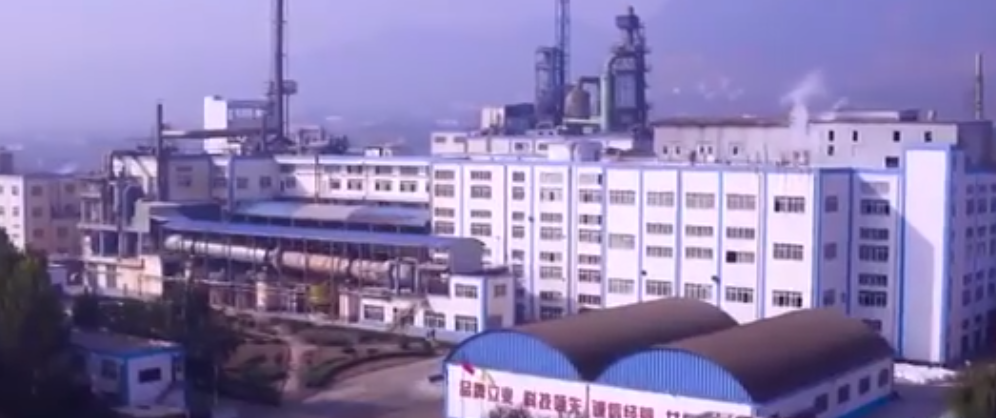
Fiber grade titanium dioxide production base supporting PET, nylon, viscose and acrylic fiber lines.
Fiber grade titanium dioxide compliance is easier to describe than to prove. What a fiber mill actually needs is batch-level evidence that the powder delivered to its silo matches the parameters its polymerization or spinning line was qualified on — not a broad product description, and not a brand name.
For PET, nylon and viscose producers, that evidence sits in a defined set of measurements: TiO₂ content, sieve residue, moisture, Fe₂O₃, pH value, electrical conductivity, specific surface area, and color values L and b — reported against the specific lot that was shipped. This guide explains how Orient International Holding Shanghai Foreign Trade Co., Ltd. (Orient International) documents compliance for its SA-50, SA-60 and SA-80 fiber grade titanium dioxide through 100% pre-shipment testing, and what buyers in China, India, Indonesia, South Korea, Bangladesh, Turkey, Saudi Arabia and Brazil typically ask to see before releasing a purchase order.
Problem Definition: The Compliance Gap in Fiber Grade Titanium Dioxide
Fiber grade titanium dioxide is a low-dosage, high-consequence input. It is dosed at a small fraction of the polymer mass to deluster or whiten the fiber, yet almost everything that determines whether it performs is invisible in the delivered bag.
Three failure modes account for most of the downstream damage, and all three surface well after goods-in inspection:
- Agglomeration — poorly dispersed particles form clusters that appear as black spots, crystal points or bright spots in chips, filament and dyed fabric.
- Oversized or abrasive particles — high sieve residue and harder crystal forms raise filter pressure, shorten spinneret clogging cycles and increase filament breaks.
- Impurity and color-value drift — variable Fe₂O₃, pH or color values produce shade differences, yellowing and uneven dyeing across lots.
None of these are visible when the bags are opened. They appear at the polymerization reactor, at the spin pack or in the dyehouse, often weeks after the material was accepted. That is why “we tested it” is not a compliance answer.
The real problem is traceability: a mill needs evidence that ties the tested sample to the shipped lot, and ties the shipped lot to the specification its process was qualified on. A second gap follows from geography — the chemistry does not change by country, but the document package does, so a supplier's standard paperwork can satisfy one market and fall short in another.
Industry Background: A Bigger Fiber TiO₂ Market With More Paperwork
Fiber grade titanium dioxide is a growing, increasingly documented segment of the pigment market. The global fiber grade titanium dioxide market was valued at USD 1.46 billion in 2024 and is projected to reach USD 1.94 billion by 2032, according to Intel Market Research.
Supply is concentrated in China, which recorded total titanium dioxide exports of 1.9017 million tons in 2024, a 15.84% year-on-year increase, based on China Customs statistics reported by Echemi. Within that demand, the polyester fiber segment accounts for over 60% of all fiber grade titanium dioxide applications, again according to Intel Market Research.
Standards give buyers a common reference point. Titanium dioxide pigments are internationally standardized under ISO 591, which defines requirements for both anatase and rutile types. Within fiber applications, the anatase crystalline form is generally preferred because its lower Mohs hardness of 5.5–6.0, compared with 6.0–7.0 for rutile, reduces wear on spinning nozzles. For delustering in polyester staple fibers, fiber grade TiO₂ is typically specified in the 0.2–0.3 µm particle size range.
Textile-industry compliance is also migrating into fiber chemicals. Venator's HOMBITAN® LW-S 100 became the first fiber anatase TiO₂ to secure the ECO PASSPORT by OEKO-TEX® for the textile industry in 2022 — a signal that downstream apparel brands now push chemical-level documentation upstream into the fiber supply chain.
Two consequences follow for buyers. First, as volume grows, the number of suppliers grows with it, and documentation becomes the practical filter. Second, because most fiber grade TiO₂ looks identical in a sample bag, claims that cannot be tied to a measurable parameter add very little to a sourcing decision.
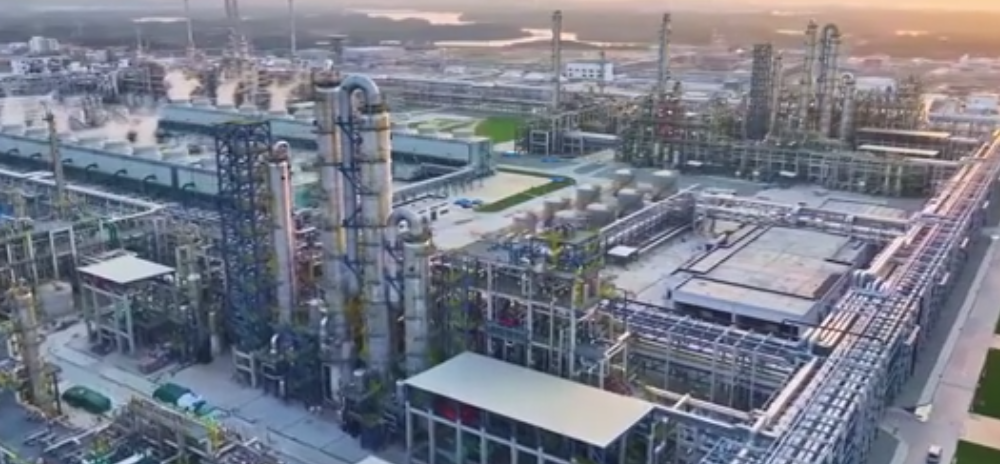
Fiber grade titanium dioxide production facility serving polyester, nylon, viscose and acrylic applications.
Detailed Solution: SA-50, SA-60, SA-80 and the 100% Pre-Shipment Test Discipline
Orient International Holding Shanghai Foreign Trade Co., Ltd. is a Shanghai-based, state-owned foreign trade enterprise founded in 1988, with registered capital of over RMB 548 million and more than 150 regular employees. The company handles self-operated and entrusted import and export of bulk commodities including titanium dioxide and petrochemical raw materials, and provides one-stop services covering international logistics, customs declaration, letter of credit settlement and cross-border supply chain risk control. Its parent group operates 73 overseas branches covering nearly 200 countries and regions.
The fiber grade range supplied for textile fiber production is SA-50, SA-60 and SA-80, with nominal TiO₂ content of ≥98.0%, ≥97.0% and ≥95.0% respectively. SA-50 is an anatase grade and is the most fully documented of the three; its published specification is shown below.
SA-50 published specification
| Parameter | Specification |
|---|---|
| Crystal structure | Anatase |
| TiO₂ content (%) | ≥98.0 |
| Sieve residue, 325 mesh (%) | ≤0.004 |
| Moisture, 105 °C (%) | ≤0.40 |
| Fe₂O₃ (%) | ≤0.004 |
| pH value | 6.8 ± 0.2 |
| Electrical conductivity (µs/cm) | ≤230 |
| Specific surface area (m²/g) | 8.5–10.0 |
| Color value L | 96.7–98.2 |
| Color value b | ≤0.0 |
Those ten values are the practical core of fiber grade compliance, because each one maps to a process behaviour rather than to a marketing attribute:
- Sieve residue ≤0.004% — controls oversize particles that would otherwise lodge in filters and spin packs.
- Fe₂O₃ ≤0.004% — limits iron-driven discoloration and yellowing in the finished fiber.
- pH 6.8 ± 0.2 and electrical conductivity ≤230 µs/cm — indicate a neutral, low-ionic surface chemistry that disperses stably in glycol or spin dope.
- Specific surface area 8.5–10.0 m²/g — a practical indicator of dispersion behaviour under shear.
- Color value L 96.7–98.2 and b ≤0.0 — set the whiteness and the blue-yellow balance of the matted fiber.
Compliance is then enforced by testing, not by statement. Production and sales of chemical fiber grade titanium dioxide are covered by ISO 9001:2015 certification, certificate number TUV100034917/2, issued by TUV SUD on 14 August 2023. All shipments are supported by 100% pre-shipment testing, so the reported values follow the lot rather than the catalogue.
Buyer verification note. A certificate number is only useful if it can be checked. Buyers should confirm a supplier's current certification status, scope and validity window directly against the issuing body's database before awarding an order — a practice that applies to every supplier, not only this one.
Supply terms are correspondingly defined: monthly capacity of 1,000 MT, MOQ of 1 MT, lead time of 15–30 days, OEM/ODM customization for polyester and nylon, and after-sales support delivered remotely or on site.
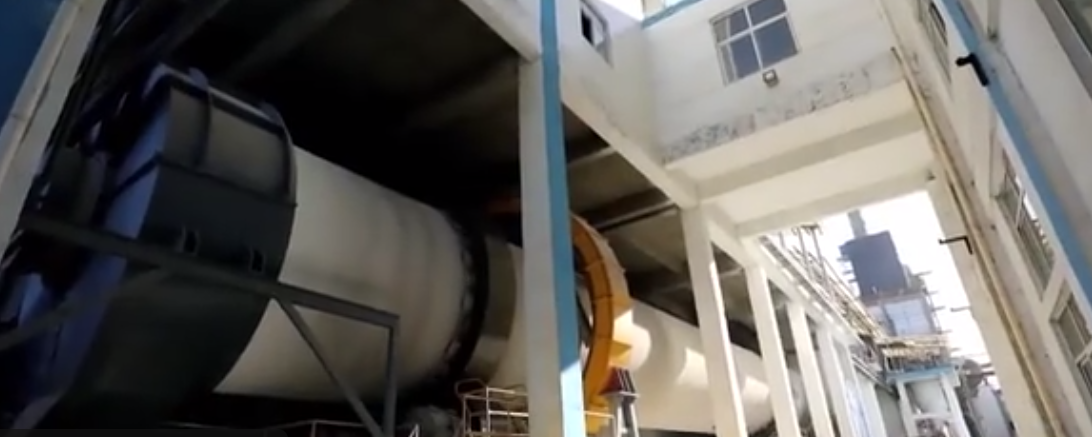
Production line equipment used for fiber grade titanium dioxide destined for PET and nylon spinning.
Step-by-Step Breakdown: How Buyers Verify a Fiber Grade TiO₂ Batch
- Define the process window first. Identify where the material enters — PET chip polymerization, viscose dope preparation or nylon melt spinning — and at what temperature and residence time. A specification only becomes meaningful once the process is fixed.
- Fix the critical parameters in writing. Convert the process window into a parameter list: TiO₂ content, sieve residue, moisture, Fe₂O₃, pH, electrical conductivity, specific surface area, and color values L and b.
- Ask for batch-level certificates, not a type test. A one-off test report proves a sample once. Compliance requires the results to be issued against the shipped lot.
- Check the certification behind the quality system. Confirm the certificate number, scope and validity window with the issuing body.
- Run a trial on the actual line. Measure dispersion quality, filter and spinneret pressure rise, break rate and shade against the incumbent grade.
- Confirm packing, labelling and traceability. Verify that the lot number on the bag links back to the test record and forward to the delivery documents.
- Write the specification into the contract. Lock the parameter list, the test method and the acceptance criteria, so every subsequent shipment is measured against the same baseline.
Step five is where most sourcing decisions are actually made. A grade that passes a laboratory test but raises filter pressure on your line is not compliant for your process, however good its datasheet looks.
Use Cases: PET Chip, PET Filament, Nylon and Viscose
The clearest demonstration of fiber grade compliance is a long-running production case rather than a laboratory claim. In a Chinese polyester project that has now run for more than ten years and consumed over 5,000 metric tons of titanium dioxide, SA-50 is used as a matting agent in polyester chip for both fiber and bottle applications.
At the polymerization stage, low iron and low ionic impurities combined with a neutral pH allow the grade to disperse evenly in ethylene glycol without sedimentation or agglomeration. It remains stable at 240–285 °C during PET esterification and polycondensation, does not reduce PET intrinsic viscosity, does not trigger side reactions, and does not generate black spots. High batch consistency has allowed the material to run on continuous polymerization lines without process modification.
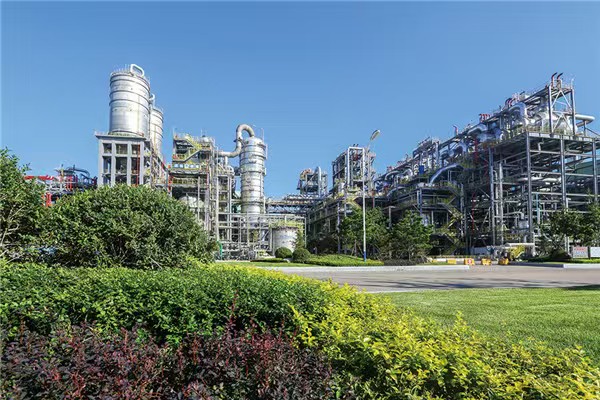
Polyester polymerization and spinning environment — the operating context for fiber grade titanium dioxide matting agents.
At the spinning stage, the reported outcomes are measurable: the spinneret clogging cycle extended by over 40%, filter replacement frequency greatly reduced, and filament breakage rate reduced by approximately 35%. Mild anatase particles lessen spinneret abrasion, which is what allows continuous high-speed spinning to run for longer between interventions.
At the finished-fiber stage, the matting effect is stable and adjustable, the matte surface is uniform without bright spots, and dyeing is consistent without streaks or color difference. The reported color value L is above 96.7, anti-yellowing performance is described as outstanding, and firm particle adhesion prevents powder from falling off during weaving and dyeing. Heat and weather resistance are also part of the reported profile.
The same logic transfers to other fiber families. Customization is offered for polyester and nylon, which means the grade and its documentation can be matched to the polymer rather than sold as one universal powder, and the SA-60 and SA-80 grades give viscose, acrylic and lower-TiO₂ formulations an alternative point on the same quality system.
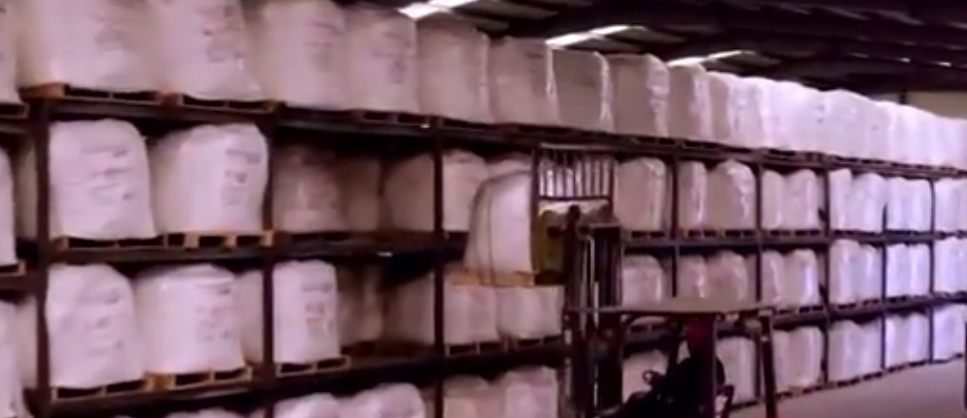
Finished goods warehouse — fiber grade titanium dioxide held under lot control before shipment.
Comparison Table: Grades, Verification Points and Regional Requirements
SA-50, SA-60 and SA-80 at a glance
| Verification point | SA-50 | SA-60 | SA-80 |
|---|---|---|---|
| TiO₂ content (%) | ≥98.0 | ≥97.0 | ≥95.0 |
| Sieve residue, 325 mesh (%) | ≤0.004 | Reported on batch certificate | Reported on batch certificate |
| Moisture at 105 °C (%) | ≤0.40 | Reported on batch certificate | Reported on batch certificate |
| Fe₂O₃ (%) | ≤0.004 | Reported on batch certificate | Reported on batch certificate |
| pH value | 6.8 ± 0.2 | Reported on batch certificate | Reported on batch certificate |
| Electrical conductivity (µs/cm) | ≤230 | Reported on batch certificate | Reported on batch certificate |
| Specific surface area (m²/g) | 8.5–10.0 | Reported on batch certificate | Reported on batch certificate |
| Color value L | 96.7–98.2 | Reported on batch certificate | Reported on batch certificate |
| Color value b | ≤0.0 | Reported on batch certificate | Reported on batch certificate |
| Pre-shipment testing | 100% | 100% | 100% |
The table is deliberately asymmetric. SA-50 publishes a full parameter set because it is the grade with the longest production record, while SA-60 and SA-80 are documented against the buyer's agreed parameter list on a per-batch basis. Buyers should treat that as a question to settle before ordering: ask which values are fixed by specification and which are confirmed per shipment.
Regional documentation: what buyers typically ask for
| Market | Buyer priority | Documentation commonly requested |
|---|---|---|
| China | Batch-to-batch consistency on continuous polymerization and spinning lines | Batch certificate of analysis, quality management system evidence, safety data sheet |
| India | Stable color on polyester and viscose lines at a controlled cost | Batch certificate of analysis, safety data sheet, import documentation |
| Indonesia | Consistent matting as polyester capacity expands | Batch certificate of analysis, packing list, certificate of origin |
| South Korea | Tight color and conductivity windows on fine-denier spinning | Batch certificate of analysis, traceability records |
| Bangladesh | Alignment with end-brand restricted substance requirements for knitwear and woven exports | Batch certificate of analysis, textile chemical compliance documentation |
| Turkey | Fiber and yarn produced for European customers | Batch certificate of analysis, EU-facing chemical documentation |
| Saudi Arabia | Downstream industrial and petrochemical users | Batch certificate of analysis, import conformity documentation |
| Brazil | Polyester fiber and filament production | Batch certificate of analysis, import documentation |
Requirements vary by buyer, by end-use and by destination customs practice, so the table should be treated as a starting checklist rather than a fixed rule. The practical point is that the same grade can require different paperwork in different markets, which is why documentation capability belongs in the supplier evaluation alongside the specification itself.
Frequently Asked Questions
What does fiber grade titanium dioxide compliance testing actually cover?
For an anatase fiber grade such as SA-50, the working test set covers TiO₂ content, sieve residue at 325 mesh, moisture at 105 °C, Fe₂O₃, pH value, electrical conductivity, specific surface area, and color values L and b. On SA-50 those values are specified at TiO₂ ≥98.0%, sieve residue ≤0.004%, moisture ≤0.40%, Fe₂O₃ ≤0.004%, pH 6.8 ± 0.2, electrical conductivity ≤230 µs/cm, specific surface area 8.5–10.0 m²/g, color value L 96.7–98.2, and color value b ≤0.0. The parameter set exists because each value predicts a specific behaviour: sieve residue and Fe₂O₃ govern filter loading and black spots, pH and conductivity govern dispersion stability, and L and b govern the shade of the finished fiber. All shipments are supported by 100% pre-shipment testing.
How do regional buyer requirements differ across Asia, the Middle East and South America?
The fiber chemistry does not change by destination, but the document package does. Buyers in China, India, Indonesia and South Korea generally prioritise a batch certificate of analysis and traceability records. Export-oriented textile markets such as Bangladesh and Turkey frequently add chemical compliance documentation because their own customers are apparel brands. Buyers in Saudi Arabia and Brazil typically need the certificate of analysis to align with local import conformity and customs paperwork. Because Orient International's parent group maintains 73 overseas branches covering nearly 200 countries and regions, documentation can be prepared for the destination market rather than issued in one fixed format.
Which SA grades are available for PET, nylon and viscose, and what ships with them?
Three fiber grades are supplied: SA-50 with TiO₂ content ≥98.0%, SA-60 with ≥97.0%, and SA-80 with ≥95.0%. They cover PET, nylon and viscose and acrylic fiber applications, with OEM/ODM customization offered for polyester and nylon. Every shipment is supported by 100% pre-shipment testing, the standard MOQ is 1 MT, lead time is 15–30 days, and the production and sales scope is covered by ISO 9001:2015 certification (certificate number TUV100034917/2, issued by TUV SUD).
What should buyers check when shortlisting top fiber grade titanium dioxide manufacturers in China?
Shortlist on evidence, not on scale claims. Five checks separate a workable supplier from a catalogue. First, a published and fixed parameter set for the grade you intend to run. Second, batch-level certificates of analysis tied to the shipped lot rather than a single type test. Third, certification that can be verified against the issuing body's database, including scope and validity window. Fourth, the ability to supply more than one grade across PET, nylon and viscose from the same quality system. Fifth, a production record you can reference. Scale alone is a weak filter — for context, LB Group (formerly Lomon Billions) is cited by Fortune Business Insights as the world's largest TiO₂ producer with over 1,501 kilotons of annual capacity as of 2025, but capacity figures say nothing about whether a specific lot will spin cleanly on your line.
Can a buyer validate a grade with a sample before committing to a bulk order?
Yes, and it is the step most worth insisting on. A useful trial runs the candidate grade through the actual polymerization, dope-preparation or spinning stage, then measures dispersion quality, filter and spinneret pressure rise, filament breakage and shade stability against the incumbent grade — so the comparison is made on your equipment rather than on a datasheet. Orient International supplies fiber grade titanium dioxide with an MOQ of 1 MT and a lead time of 15–30 days, and supports sample and trial arrangements directly. To request a sample, a quotation for SA-50, SA-60 or SA-80, or the full company profile, contact sales@petchemical.com or +86 18928113542 (also available on WhatsApp), or download the brochure from the link below.
Conclusion
Compliance in fiber grade titanium dioxide is a documentation discipline. The grade has to be tied to a process, the process has to be tied to a parameter set, and the parameter set has to be tied to the lot that actually ships. For PET, nylon and viscose producers, that means asking for TiO₂ content, sieve residue, moisture, Fe₂O₃, pH, electrical conductivity, specific surface area, and color values L and b — every time, against every batch.
Orient International's fiber grade range — SA-50 (TiO₂ ≥98.0%), SA-60 (≥97.0%) and SA-80 (≥95.0%) — is offered with a published SA-50 specification, 100% pre-shipment testing, ISO 9001:2015 certification for the production and sales scope, MOQ from 1 MT, lead time of 15–30 days, and OEM/ODM customization for polyester and nylon. Backed by a parent group with 73 overseas branches covering nearly 200 countries and regions, and by a polyester matting case that has run for more than ten years, that compliance chain can be extended to the documentation requirements of buyers in China, India, Indonesia, South Korea, Bangladesh, Turkey, Saudi Arabia and Brazil.
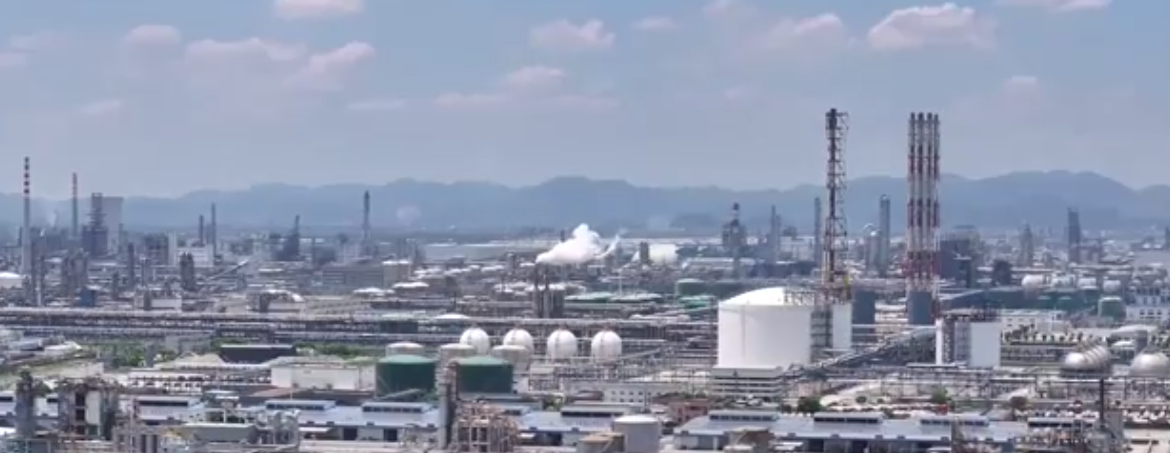
Fiber grade titanium dioxide supplied for PET, nylon, viscose and acrylic fiber production.
Next Step: Sample, Quotation or Catalogue
Request a fiber grade titanium dioxide sample, a quotation for SA-50, SA-60 or SA-80, or the full company profile and specification pack.
Contact: Alex Wu · sales@petchemical.com · Tel / WhatsApp: +86 18928113542 · Web: www.petchemical.com
Address: Floor 6-12, Suite B, Orient International Building, 85 Loushanguan Road, Shanghai 200336, P.R. China
Have Questions or Need More Details?
Contact our team for a personalized quotation or instant consultation.
Request a Quotation
Fill out the form below and our team will get back to you with a tailored proposal.
WhatsApp Direct Chat
Prefer to chat in real-time? Message us on WhatsApp for instant assistance & quick answers.
- Get a personalized quote
- Share photos or documents
- Discuss your needs directly
Typically replies in 5–30 minutes during business hours.