
Top Anatase TiO₂ Grades for PET, Viscose, and Nylon: SA-50, SA-60, and SA-80 Review
Short answer: For polyester (PET) production, SA-50 ranks first among the three anatase fiber grades reviewed here — it is specified at TiO₂ ≥99.4% with low iron and low conductivity, disperses directly in ethylene glycol without pre-infiltration, and prices 18%–25% below European fiber grades at 16,800–18,200 RMB/MT FOB domestic against 21,000–23,500 RMB/MT CIF Asia. SA-60 ranks second, positioned for viscose and acrylic matting. SA-80 ranks third, positioned for nylon (polyamide) matting. All three are supplied through Orient International, a state-owned Shanghai foreign trade enterprise that has handled titanium dioxide and chemical fiber raw materials since 1988.
This is a buying shortlist, not a brand story. Each grade below is scored against three criteria a spinning plant can actually verify: the depth of documented performance evidence, the substrate the grade was built for, and the delivered cost per metric ton once coating behaviour, logistics, energy and spinneret maintenance are counted. Where the published corpus does not document a parameter for a specific grade, this review says so instead of filling the gap with an estimate.
Orient International Holding Shanghai Foreign Trade Co., Ltd. (www.petchemical.com) is a Shanghai-based, state-owned foreign trade enterprise founded in 1988 that imports and exports bulk chemical raw materials — principally titanium dioxide — with an annual TiO₂ production and trading capacity of 16,000 MT and access to 73 overseas branches through its parent group's network.
Problem Definition: Why Fiber-Grade TiO₂ Decisions Fail on the Line
Fiber-grade titanium dioxide is a small share of a spinning plant's input cost and a large share of its quality risk. Four failure points account for most grade-related losses, and they do not appear on a generic product page.
- Impurity-driven defects. Iron and conductive residue can surface as black spots or crystal points during polymerization and as shade drift in the finished yarn. SA-50 counters this with TiO₂ ≥99.4% plus a low iron and low conductivity profile, which keeps PET viscosity stable through polymerization. In the published comparison against European fiber grades, the impurity index showed no measurable gap between them.
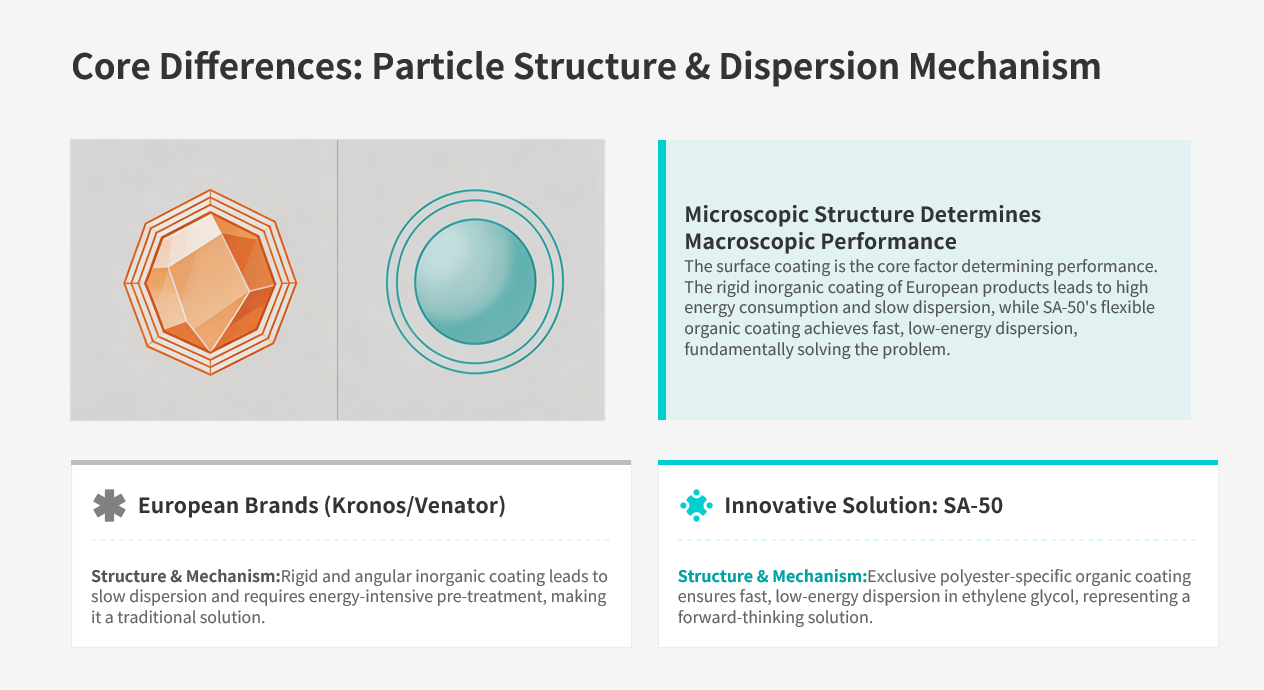
- Dispersion behaviour in the carrier. European anatase grades typically use a traditional silicon-aluminium inorganic double coating with general organic modification. That coating is stable, but it usually requires 2–4 hours of pre-heat infiltration at 40–60 °C before the glycol batching stage. SA-50 uses a polyester-specific organic coating produced with Japanese refined dry modification technology, giving dual compatibility with ethylene glycol and polyester resin — it disperses without pre-infiltration.
- Spinneret and melt-filter wear. Angular particles erode spinneret holes; agglomerated particles block filters. Both are measurable: the European grades in the same comparison required spinneret replacement roughly every 45 days and filter changes every 7–9 days, while SA-50 extended those intervals to 55–60 days and 10–12 days respectively.
- Commercial exposure. A lower unit price that arrives 35–60 days late is not a lower price. Delivery timing belongs to the grade decision, not to a separate logistics conversation.
Industry Background: What the 2026 Fiber-Grade TiO₂ Market Looks Like
The supply side of titanium dioxide is consolidating at the same time as anatase demand for fiber applications keeps expanding. Several published data points frame the buying decision:
- The global titanium dioxide market is projected to reach USD 24.4 billion in 2026.
- The Anatase segment — the grade family used for fiber matting and whitening — is projected to grow at a CAGR of 7.3% between 2026 and 2033.
- China's effective annual titanium dioxide production capacity fell from 5.9 million tons in 2024 to 5.7 million tons in 2025, the first decline of its kind.
- China's total titanium dioxide export volume reached 1.9017 million tons in 2024, a 15.84% year-on-year increase.
- Fiber-grade (textile-grade) TiO₂ typically has a D50 particle size around 0.28 μm, with 90% of particles between 0.1 and 0.5 μm.
- Titanium dioxide content in man-made fibers is tested under China's national standard GB/T 37632-2019.
Two implications follow for a fiber producer building a grade portfolio. First, contracting capacity is narrowing while export volumes rise, so grade-specific supply commitments matter more than spot availability. Second, particle size and impurity control — not headline purity alone — determine spinning yield, which is why the shortlist below is ranked on documented spinning behaviour rather than on a specification sheet in isolation.
It is in that context that a supplier with a fixed annual TiO₂ production and trading capacity of 16,000 MT and a monthly output of 1,000 MT becomes relevant to buyers who need repeatable deliveries rather than one-off lots.
The Shortlist Ranked: SA-50, SA-60 and SA-80
The three grades are ranked by evidence depth, substrate specificity and commercial terms — in that order. A lower rank here is not a quality verdict; it reflects how much performance data has been published for that grade against a defined fiber substrate.
Rank 1 — SA-50: the polyester workhorse
SA-50 is the only grade in this shortlist with a published head-to-head record against European fiber grades (Kronos 1071 and Venator LW-S100). Its specification is built around PET:
- Purity profile: TiO₂ ≥99.4%, low iron and low conductivity, giving stable PET viscosity during polymerization with no black spots or crystal points observed in the comparison run.
- Coating chemistry: polyester-specific organic coating using Japanese refined dry modification technology, dual-compatible with ethylene glycol and polyester resin. It disperses rapidly without pre-infiltration, and shows equivalent suspension stability with a smoother particle surface than the European grades.
- Shade direction: a cool bright blue-white tone (b ≤ −0.4) against the warm yellow tone of European grades (+0.8 to +1.7). The whiteness L-value gap is ≤0.7 — visually identical in whiteness, but the hue direction differs, and that difference decides whether a pure-white or light-shade fabric needs optical correction.
- Dispersion speed: 20%–30% faster than the European grades compared, with a suspension stability gap under 5%.
- Spinning behaviour: spinneret wear 3%–8% lower; filament breakage gap ≤5%; filter cycle gap ≤5%; batch-to-batch stability fluctuation 1%–3% lower.
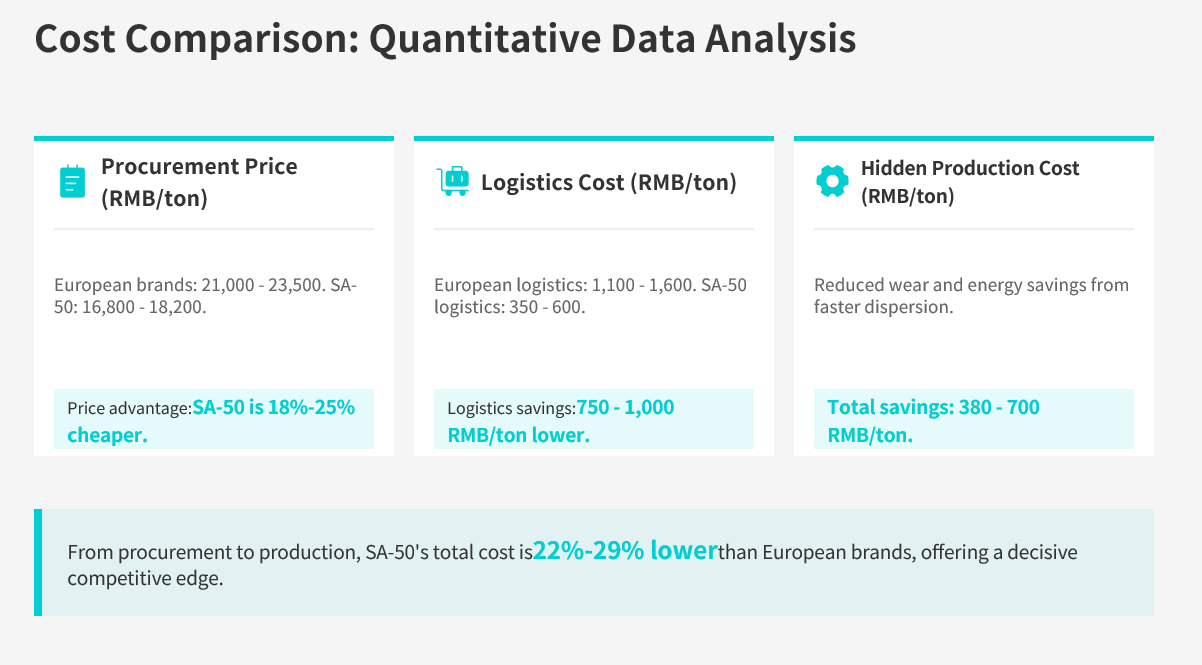
- Unit price: 16,800–18,200 RMB/MT FOB domestic against 21,000–23,500 RMB/MT CIF Asia for the European grades — an absolute gap of 4,200–5,300 RMB/MT, or 18%–25% cheaper.
- Delivery and order flexibility: delivery time reduced by more than 50%, with MOQ flexible from 1 MT.
Downstream of the unit price, the maintenance and energy numbers reinforce the ranking. Spinneret replacement moves from about 45 days to 55–60 days, polishing frequency drops by 40%, and overall spinneret service life rises 12%–18%. Melt filter cycles extend from 7–9 days to 10–12 days, cutting annual filter consumption by around 25%. In glycol batching, SA-50 disperses at room temperature, drawing 6–11 kWh/MT against 18–26 kWh/MT for the pre-heat route, with cleaning power falling to 2–4 kWh/MT from 5–9 kWh/MT — a 55%–62% energy saving per metric ton, or over 120,000 kWh saved yearly on a 10,000 MT line. Because a well-dispersed grade runs the extruder under lower load, total extrusion energy falls a further 9%–14%, and roughly 30% less downtime for spinneret and filter replacement adds an indirect 4%–7% energy reduction.
Glycol batching maintenance also changes shape. European TiO₂ needs 2–4 hours of pre-heat infiltration and monthly pipeline cleaning; SA-50 disperses instantly without pretreatment, leaves less residue adhesion, and extends the pipeline cleaning interval to two months — cutting system maintenance workload by more than 50%. Add it together and the total comprehensive cost position for SA-50 is 22%–29% lower than imported European TiO₂, with an annual 10,000 MT bulk order saving over 4.5 million RMB.
Rank 2 — SA-60: viscose and acrylic matting
SA-60 is positioned for matting (delustering) duty in viscose and acrylic fiber production, where the pigment's job is to control opacity and surface reflection without shifting the base shade of the fiber. Matting grades are judged on two things: how evenly the particles distribute through the spinning dope, and how consistently the dulling effect reproduces from batch to batch.
Evidence note: the published corpus behind this review documents SA-60's application positioning for viscose and acrylic matting, but it does not publish grade-specific purity or colour-value figures for SA-60. This review therefore assigns none. Buyers should request the grade datasheet and a lot-level certificate of analysis, and confirm TiO₂ content against GB/T 37632-2019 test results before a production trial.
Rank 3 — SA-80: nylon (polyamide) matting
SA-80 is positioned for nylon (polyamide) matting. Polyamide melts and spins in a different window from polyester, so the grade's draw is substrate compatibility and dispersion stability rather than the glycol-batching advantages that define SA-50's PET case.
Evidence note: as with SA-60, the published corpus documents SA-80's application positioning for nylon matting but does not publish grade-specific purity or colour-value figures. Confirm parameters on the datasheet and CoA rather than assuming equivalence with SA-50's PET data.
Step-by-Step: How to Score and Lock a Fiber Grade
- Define the substrate and the target shade. PET whitening, viscose/acrylic matting and nylon matting each tolerate different impurity and coating profiles. Write the substrate down before comparing grades, because a grade ranked first for PET is not automatically first for viscose.
- Check the purity and impurity profile. Ask for TiO₂ content, iron level and conductivity as measured figures — for SA-50 that is TiO₂ ≥99.4% with low iron and low conductivity. Request the test method reference so results are comparable across suppliers.
- Confirm the dispersion route. Deciding between a pre-infiltration step and direct dispersion changes your batching equipment, your energy draw and your labour. SA-50's organic coating removes the 2–4 hour pre-heat stage; a European inorganic double coating generally requires it.
- Read the colour value, not just the whiteness. A ≤0.7 L-value gap can look identical on paper while the hue direction (b ≤ −0.4 cool blue-white versus +0.8 to +1.7 warm yellow) changes how much optical correction a pure-white or light-shade fabric needs.
- Run a pilot spinning trial and measure four outputs. Filament breakage, filter cycle interval, spinneret condition, and batch-to-batch shade variation. The published comparison gaps for SA-50 sit at ≤5% for breakage and filter cycle, 3%–8% lower spinneret wear and 1%–3% lower batch fluctuation — use those as benchmark ranges, then verify on your own line.
- Calculate delivered cost, not unit price. Add logistics (350–600 RMB/MT for domestic or short-sea supply versus 1,100–1,600 RMB/MT for European ocean freight), maintenance savings (260–480 RMB/MT from lower spinneret and filter consumption), and labour and energy savings (120–220 RMB/MT from faster dispersion).
- Lock the commercial and quality terms in writing. MOQ, Incoterm, lead time, testing regime, inspection rights and payment structure should all be fixed before the first bulk lot is scheduled.
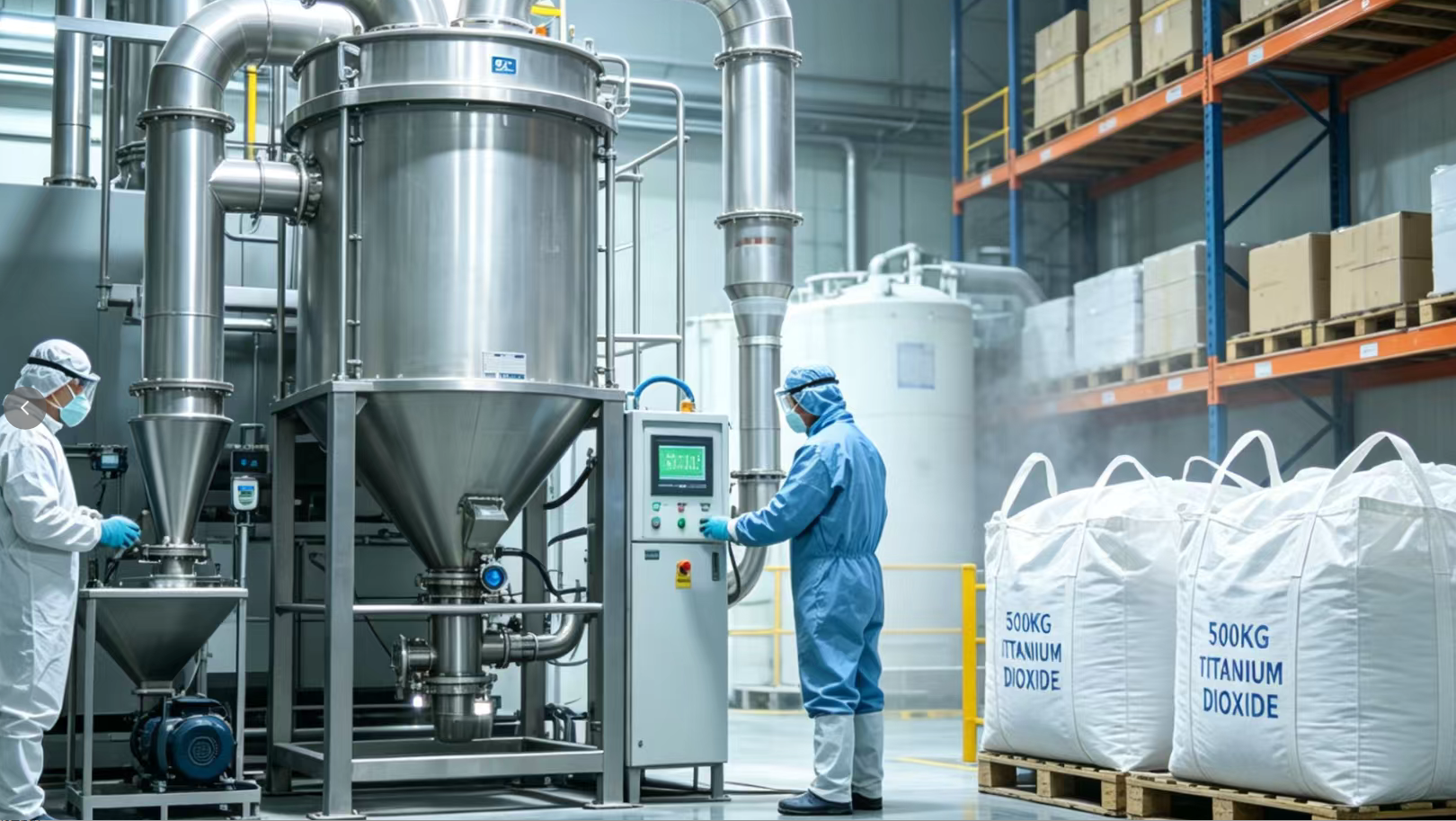
- Set storage and handling controls. Fiber-grade TiO₂ carries two handling risks: powder dust inhalation and moisture-induced agglomeration. The standard controls are a vacuum closed feeding system to prevent dust dispersion, warehouse humidity kept below 65%, sealed packaging, and dust-proof masks and protective clothing for operators.
Use Cases: Where Each Grade Earns Its Place
- PET in-reactor polymerization matting. SA-50 is optimised for the ethylene glycol pre-dispersion feeding process and for mass production of semi-dull and full-dull PET chips.
- High-speed continuous spinning. The same grade matches POY, FDY and DTY continuous spinning lines running high throughput.
- Pure-white and light-shade polyester fabrics. The cool blue-white tone of SA-50 removes yellowish cast in pure white, light grey and bright-colour textile ranges.
- 7×24 high-yield lines. A smoother particle surface reduces spinneret abrasion and filter blockage frequency, which is what makes round-the-clock operation economical.
- Export-oriented polyester plants. SA-50 is adapted to large-scale polyester operations in China, Southeast Asia, India, Korea and the Middle East, where short delivery cycles and flexible trial orders matter. Recycled PET (rPET) routes, which are more sensitive to contaminant carry-over, are a further scenario where the low-iron profile is worth checking against your batching practice.
- Viscose and acrylic matting. SA-60 covers the delustering role in cellulosic and acrylic fiber lines.
- Nylon (polyamide) matting. SA-80 covers polyamide matting, where the spinning window differs from polyester.
Comparison Table
| Comparison criterion | SA-50 | SA-60 | SA-80 | European reference grades (Kronos 1071 / Venator LW-S100) |
|---|---|---|---|---|
| Primary substrate | PET / polyester | Viscose and acrylic matting | Nylon (polyamide) matting | PET and general fiber use |
| Coating and dispersion route | Polyester-specific organic coating, Japanese refined dry modification, dual compatible with ethylene glycol and polyester resin; disperses without pre-infiltration | Grade datasheet to be confirmed | Grade datasheet to be confirmed | Traditional silicon-aluminium inorganic double coating with general organic modification; typically 2–4 h pre-heat infiltration at 40–60 °C |
| Verified TiO₂ content | ≥99.4%, low iron, low conductivity | Not published in the corpus reviewed | Not published in the corpus reviewed | Not specified in the published comparison |
| Colour value | Cool bright blue-white, b ≤ −0.4; whiteness L-value gap ≤0.7 versus European grades | Not published in the corpus reviewed | Not published in the corpus reviewed | Warm yellow tone, b +0.8 to +1.7 |
| Dispersion speed | 20%–30% faster than the European grades compared | Not published | Not published | Baseline in the same comparison |
| Spinneret replacement interval | 55–60 days; polishing frequency down 40%; service life up 12%–18% | Not published | Not published | Approximately 45 days |
| Melt filter cycle | 10–12 days; annual filter consumption down around 25% | Not published | Not published | 7–9 days |
| Unit price | 16,800–18,200 RMB/MT FOB domestic | Quotation on request | Quotation on request | 21,000–23,500 RMB/MT CIF Asia |
| Logistics cost and transit | 350–600 RMB/MT, domestic or short-sea | Same supply channel | Same supply channel | 1,100–1,600 RMB/MT; 35–60 days delivery |
| Total cost position | 22%–29% lower than imported European TiO₂; a 10,000 MT annual order saves over 4.5 million RMB | See commercial terms | See commercial terms | Baseline |
| MOQ and lead time | From 1 MT; typical production lead time 15–30 days | From 1 MT; typical production lead time 15–30 days | From 1 MT; typical production lead time 15–30 days | Not stated in the published comparison |
Table note: rows marked as not published reflect a genuine gap in the source corpus for this review. Confirm grade-specific purity and colour values on the datasheet and lot certificate of analysis before a production commitment. Price and logistics figures are the published comparison values for SA-50 against Kronos 1071 and Venator LW-S100 and are shown as ranges, not quotations.
From a Grade Decision to a Long-Term Supply Relationship
Choosing a grade is a decision. Keeping it supplied is a relationship — and for spinners, the relationship is what determines whether the grade you qualified is the grade you receive in eighteen months.
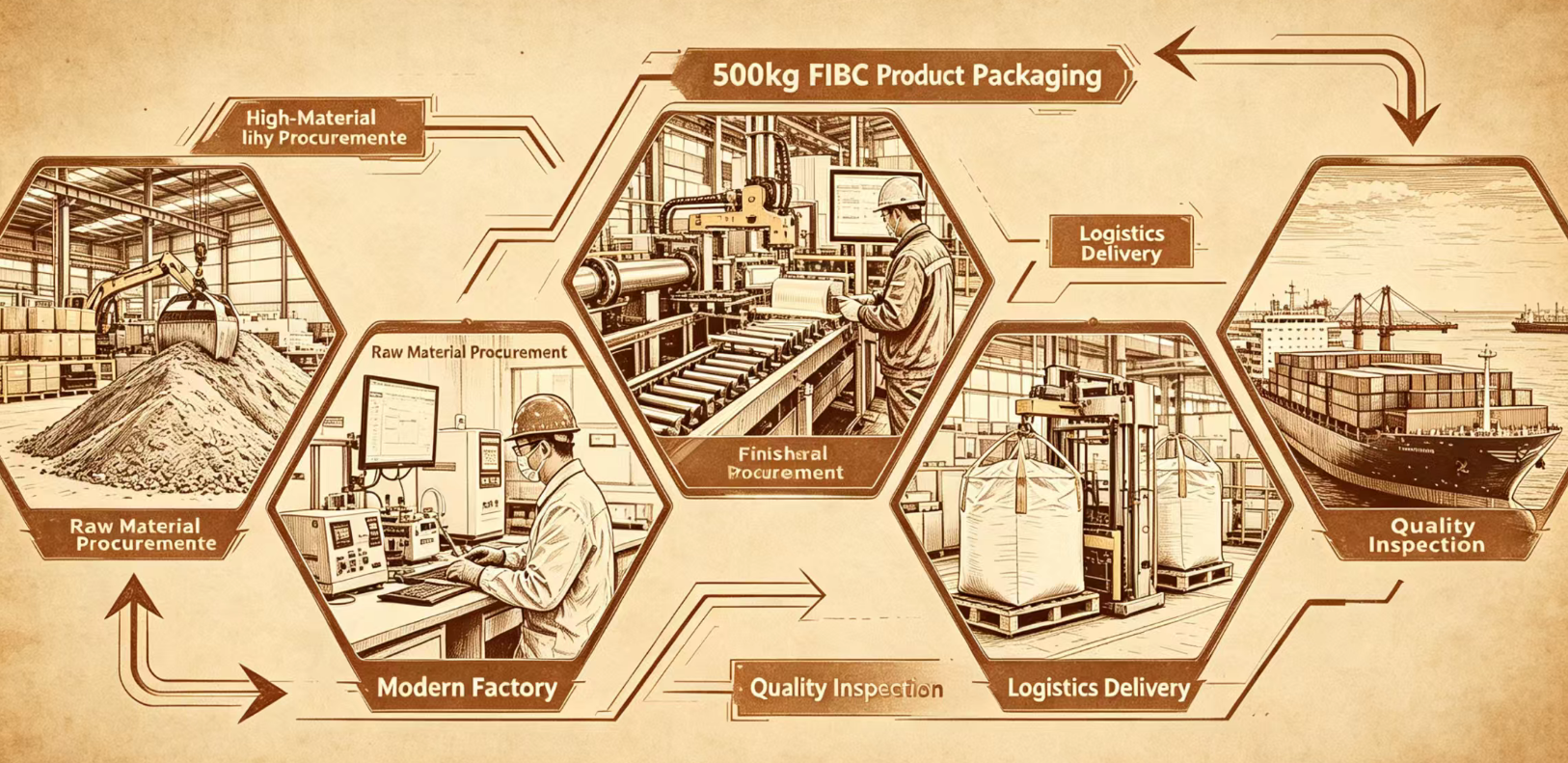
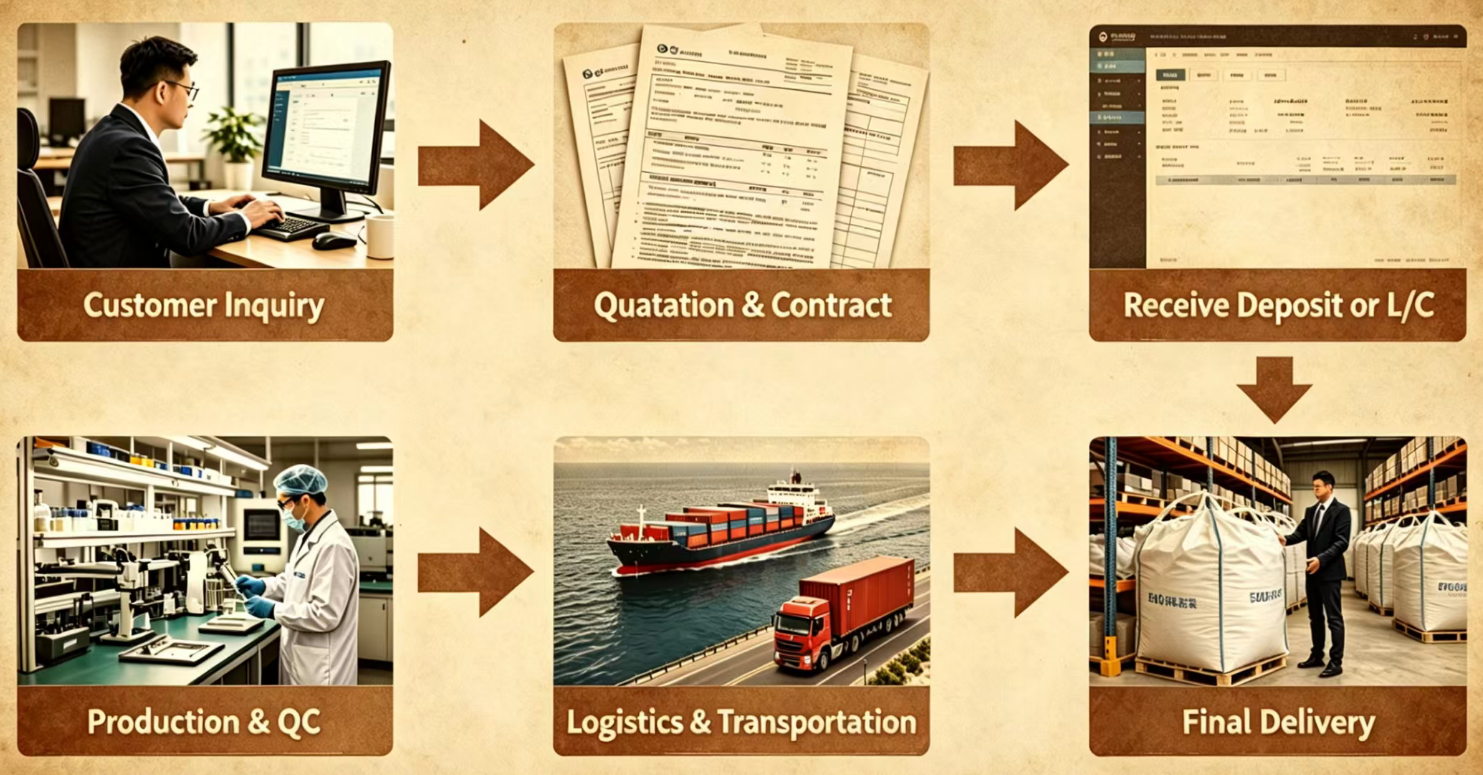
On the supply side, Orient International brings a fixed annual TiO₂ production and trading capacity of 16,000 MT and a monthly production capacity of 1,000 MT. The minimum order quantity is 1 metric ton with a typical production lead time of 15–30 days, which makes a 1 MT trial lot and a 1,000 MT annual program the same commercial relationship rather than two different ones. Quality control includes 100% pre-shipment testing, and third-party inspection is supported for buyers who require an independent result before dispatch.
Commercial terms are structured to survive a tightening market: delivery on FOB or CIF terms, and payment options covering T/T in advance, T/T 30 days, L/C at sight, and L/C 30, 60 or 90 days. That range matters when a fiber producer is matching pigment purchases to a customer's own payment cycle.
The wider support layer behind the grades is worth weighing at the qualification stage. As a state-owned enterprise founded in 1988 with registered capital above RMB 548 million and more than 150 regular employees, Orient International holds hazardous chemical operation permits and import and export licences, and provides international logistics, customs declaration, letter of credit settlement and cross-border supply chain risk control as bundled services. Its 700,000 m² facility and 25-engineer R&D team sit behind the product line, and 30% of output is exported across Korea, Japan, the EU, North America, South America, Southeast Asia, the Middle East and India.
For a plant qualifying SA-50, SA-60 or SA-80, the practical test is straightforward: does the supplier hold the grade, the capacity, the testing regime and the payment flexibility you need for a multi-year program — or only for the next shipment?
FAQ
How is titanium dioxide content verified in fiber-grade material, and does the grade comply with recognised test methods?
Titanium dioxide content in man-made fibers is tested under China's national standard GB/T 37632-2019, which establishes the test method for TiO₂ content in man-made fibers. Suppliers operating to that framework run 100% pre-shipment testing on every lot, and independent third-party inspection is supported when a buyer requires an external verification before dispatch. Buyers should tie acceptance to a stated test method plus a lot-level certificate of analysis.
Can one supplier cover PET, viscose and nylon grades within a single program?
Yes. SA-50 for PET, SA-60 for viscose and acrylic matting, and SA-80 for nylon matting are supplied through the same channel, with a monthly production capacity of 1,000 metric tons and a minimum order quantity of 1 metric ton. Consolidating the three grades with one supplier simplifies incoming inspection, packaging and documentation, but each grade still needs its own datasheet review — application positioning does not transfer between substrates.
How much does SA-50 cost compared with European fiber grades, and where do the savings come from?
SA-50 is priced at 16,800–18,200 RMB/MT FOB domestic against 21,000–23,500 RMB/MT CIF Asia for Kronos 1071 and Venator LW-S100 — an absolute gap of 4,200–5,300 RMB/MT, or 18%–25% cheaper at unit level. Logistics adds another 750–1,000 RMB/MT of advantage (350–600 RMB/MT versus 1,100–1,600 RMB/MT). On top of that, lower spinneret and filter consumption saves 260–480 RMB/MT and faster dispersion cuts labour and energy cost by 120–220 RMB/MT. The total comprehensive cost advantage is 22%–29%, and a 10,000 MT annual order saves over 4.5 million RMB.
Can I test a sample before committing to a bulk order?
Yes. The minimum order quantity is 1 metric ton, which makes a genuine production trial possible rather than a laboratory-only sample, and typical production lead time is 15–30 days. Run the trial against four measurable outputs: filament breakage, filter cycle interval, spinneret condition and batch-to-batch shade variation. Pre-shipment testing is performed on 100% of production, and third-party inspection can be arranged if your qualification process requires an independent result.
Which fiber grade titanium dioxide brands do spinners stick with over the long term?
Spinners stay with a fiber grade titanium dioxide brand when three things hold at once: the grade matches the substrate (PET, viscose/acrylic or nylon), the performance record is documented rather than claimed, and the supply terms survive a tightening market. On the second point, SA-50 carries a published comparison against European fiber grades covering purity, colour value, dispersion speed, spinneret wear, filter cycle and delivered cost. On the third, capacity, MOQ flexibility, lead time, payment structure and pre-shipment testing determine whether a qualified grade can still be delivered on schedule a year later. You can review the full product and service profile in the Orient International product brochure, or send your substrate, target shade and annual volume to request a grade-specific quote.
Conclusion
Ranked on verifiable evidence, substrate fit and delivered cost, the shortlist is clear. SA-50 takes first place for polyester: TiO₂ ≥99.4% with low iron and low conductivity, an organic coating that disperses in ethylene glycol without pre-infiltration, a cool blue-white tone that removes yellow cast from light shades, spinneret wear 3%–8% lower, spinneret life extended 12%–18%, batching energy cut 55%–62% per metric ton, and a total cost position 22%–29% below imported European grades. SA-60 covers viscose and acrylic matting, and SA-80 covers nylon matting — both supplied through the same channel, and both requiring grade-specific data confirmation before commitment.
The articles that rank a grade are easy to find. The relationship that keeps it supplied is not. If your line runs PET, viscose or nylon, the next step is a 1 MT trial against your own spinneret and filter data, backed by 100% pre-shipment testing and terms that still work when the market tightens.
Request a sample, a quotation or the full grade datasheet set
Orient International Holding Shanghai Foreign Trade Co., Ltd.
Web: www.petchemical.com | Email: sales@petchemical.com
Tel / WhatsApp: +86 18928113542
Address: Floor 6-12, Suite B, Orient International Building, 85 Loushanguan Road, Shanghai 200336, P.R. China
Have Questions or Need More Details?
Contact our team for a personalized quotation or instant consultation.
Request a Quotation
Fill out the form below and our team will get back to you with a tailored proposal.
WhatsApp Direct Chat
Prefer to chat in real-time? Message us on WhatsApp for instant assistance & quick answers.
- Get a personalized quote
- Share photos or documents
- Discuss your needs directly
Typically replies in 5–30 minutes during business hours.