
What Is Fiber Grade Titanium Dioxide? Anatase TiO₂ Basics for PET, Nylon and Viscose
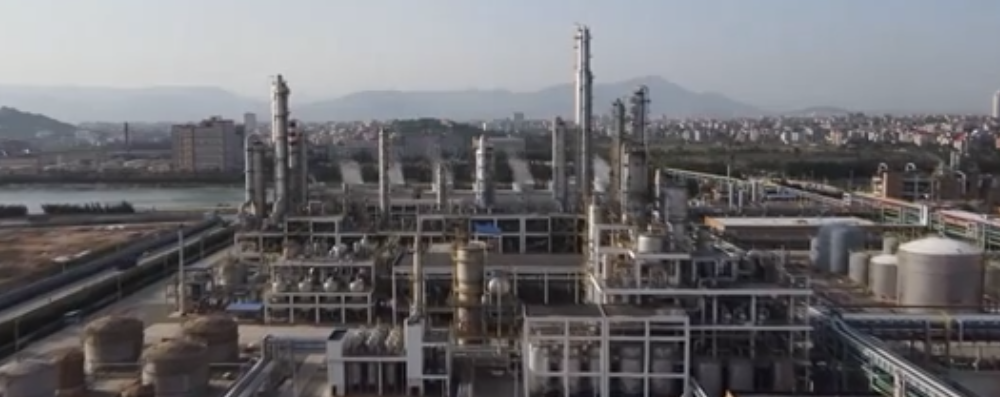
Fiber grade titanium dioxide is anatase TiO₂ that is compounded into a fiber polymer or a spinning dope so the finished fiber becomes whiter or more matte. It works from inside the fiber, not as a coating applied afterwards. The term describes a family of specifications rather than one product: SA-50 is a whitening grade for polyester (PET), SA-60 is a matting grade for viscose and acrylic, and SA-80 is a matting grade for nylon.
Most fiber producers arrive at this question with the same practical problem. A grade that runs cleanly in one polymer can create dispersion problems, color drift or spinneret wear in another. This guide explains what separates fiber grade TiO₂ from general-purpose TiO₂, what each parameter on a grade sheet actually controls on the line, and why PET, nylon and viscose require different grades. It is published by Orient International Holding Shanghai Foreign Trade Co., Ltd. (www.petchemical.com), a Shanghai-based state-owned foreign trade enterprise under Orient International Group founded in 1988, which supplies chemical fiber grade titanium dioxide and other petrochemical raw materials to markets including Korea, Japan, the EU, North America, South America, South East Asia, the Middle East and India.
Why One Titanium Dioxide Grade Cannot Serve PET, Nylon and Viscose
The mineral is the same; the constraint set is not. Four constraints change from one polymer to the next, and a fiber grade is built around them.
- Function — whitening or matting. Polyester fiber is normally whitened: the grade raises the lightness of the yarn. Viscose, acrylic and nylon are normally matted: the grade reduces surface gloss and produces a dull, even appearance.
- Process medium. In polyester, SA-50 is dispersed in ethylene glycol and then carried through esterification and polycondensation at 240–285 °C, where it must resist hydrolysis, hold a neutral pH and remain stable so the intrinsic viscosity of the polymer is not disturbed. Viscose is a solution route, so the additive has to be compatible with a spinning dope rather than with a melt. Nylon is melt-processed, where dispersion stability under heat is the dominant requirement.
- Impurity ceilings. All three grades cap Fe₂O₃ at ≤0.004%, but their electrical conductivity and pH limits differ: SA-50 is ≤230 μs/cm at pH 6.8 ± 0.2, SA-60 is ≤120 μs/cm at pH 7.2 ± 0.6, and SA-80 is ≤100 μs/cm at pH 6.8–8.0.
- Optical targets. SA-50 is specified at L 96.7–98.2 and b ≤0.0, SA-60 at L ≥96.5 and b ≤0.5, and SA-80 at L 92.0–97.0 and b ≤3.
The most common sourcing mistake is comparing grades on TiO₂ content alone. A higher content is not automatically the better choice. SA-80's ≥95.0% specification is not a weakened version of SA-50's ≥98.0%; it is a matting grade for a different polymer, and its broader optical window (L 92.0–97.0, b ≤3) reflects the duller surface that matting is designed to produce.
Fiber Grade TiO₂ in the 2026 Titanium Dioxide Market
Context for buyers planning volume into 2026 and beyond:
- The global titanium dioxide market is projected to reach USD 24.4 billion in 2026 (Grand View Research, June 2026).
- The anatase segment, the crystal form used in all three grades covered here, is projected to grow at a CAGR of 7.3% between 2026 and 2033 (Grand View Research, June 2026).
- China's effective annual TiO₂ production capacity fell from 5.9 million tons in 2024 to 5.7 million tons in 2025 (SunSirs / Titanium Dioxide Alliance, May 2026).
- China's TiO₂ export volume reached 1.9017 million tons in 2024, a 15.84% year-on-year increase (SunSirs / Titanium Dioxide Alliance, May 2026).
- Published technical data on textile grade material places fiber grade TiO₂ at a D50 of about 0.28 μm, with 90% of particles between 0.1 and 0.5 μm.
- China specifies a national test method for TiO₂ content in man-made fibers under GB/T 37632-2019 (Standardization Administration of China).
For a fiber producer, the combination matters more than any single figure. Capacity in the largest producing country contracted while export volumes continued to rise, which means the volume reaching overseas buyers is increasingly handled by export-oriented suppliers rather than by the mills alone. Fiber grade is a small, specification-heavy slice of the TiO₂ market, and the parameters that decide whether a batch runs cleanly, namely Fe₂O₃, electrical conductivity, pH and sieve residue, are exactly the parameters that get overlooked when a purchase decision is based on price and content percentage only.
Reading a Fiber Grade Specification Sheet
The parameters and what they control
- Crystal structure — anatase. SA-50, SA-60 and SA-80 are all anatase grades. Crystal form sits at the top of a fiber grade sheet because it governs both optical behavior and particle hardness.
- TiO₂ content. SA-50 ≥98.0%, SA-60 ≥97.0%, SA-80 ≥95.0%. Content determines how much pigment is needed to reach a target whiteness or matte level, and therefore how much additive enters the polymer system.
- Fe₂O₃ content — ≤0.004% on all three grades. Iron is the classic source of yellowing, so a low iron ceiling is the parameter sitting behind anti-yellowing performance in whitened fiber.
- Sieve residue (325 mesh). SA-50 ≤0.004%, SA-60 ≤0.05%, SA-80 ≤0.004%. Coarse residue is what blocks spinnerets and shortens filter life.
- Moisture (105 °C) — ≤0.40% on all three grades. Moisture carried into a melt process can create voids and pressure fluctuations; in a dope process it dilutes the system.
- pH. SA-50 6.8 ± 0.2, SA-60 7.2 ± 0.6, SA-80 6.8–8.0. In polyester, a neutral pH is what keeps the additive from triggering side reactions during polycondensation.
- Electrical conductivity (EC). SA-50 ≤230 μs/cm, SA-60 ≤120 μs/cm, SA-80 ≤100 μs/cm. EC is an indicator of soluble ionic species in the pigment; each grade publishes the ceiling its intended polymer can accept.
- Color value L. SA-50 96.7–98.2, SA-60 ≥96.5, SA-80 92.0–97.0. L describes lightness: for a whitening grade higher is better, while for a matting grade a controlled, lower L is part of the dulling effect.
- Color value b. SA-50 ≤0.0, SA-60 ≤0.5, SA-80 ≤3. The b value sits on the yellow-to-blue axis, and SA-50's b ≤0.0 is the specification that supports anti-yellowing behavior in polyester.
- Specific surface area (SSA). Published for SA-50 at 8.5–10.0 m²/g. SSA is not published for SA-60 or SA-80 in the available grade sheets.
SA-50 — the whitening grade for polyester (PET)
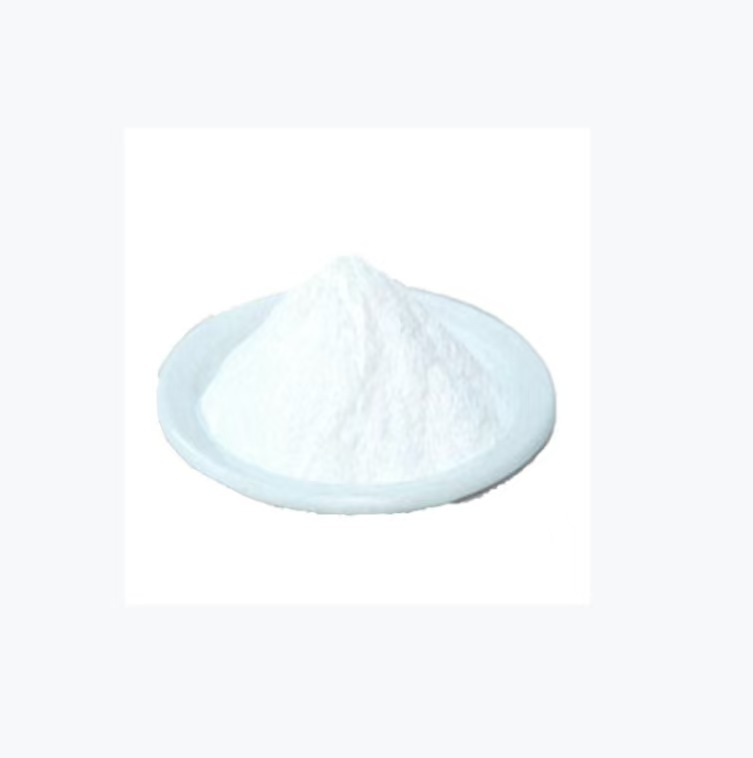
- Crystal structure: anatase
- TiO₂ content: ≥98.0%
- Sieve residue (325 mesh): ≤0.004%
- Moisture (105 °C): ≤0.40%
- Fe₂O₃: ≤0.004%
- pH: 6.8 ± 0.2
- Electrical conductivity: ≤230 μs/cm
- Specific surface area: 8.5–10.0 m²/g
- Color value L: 96.7–98.2; color value b: ≤0.0
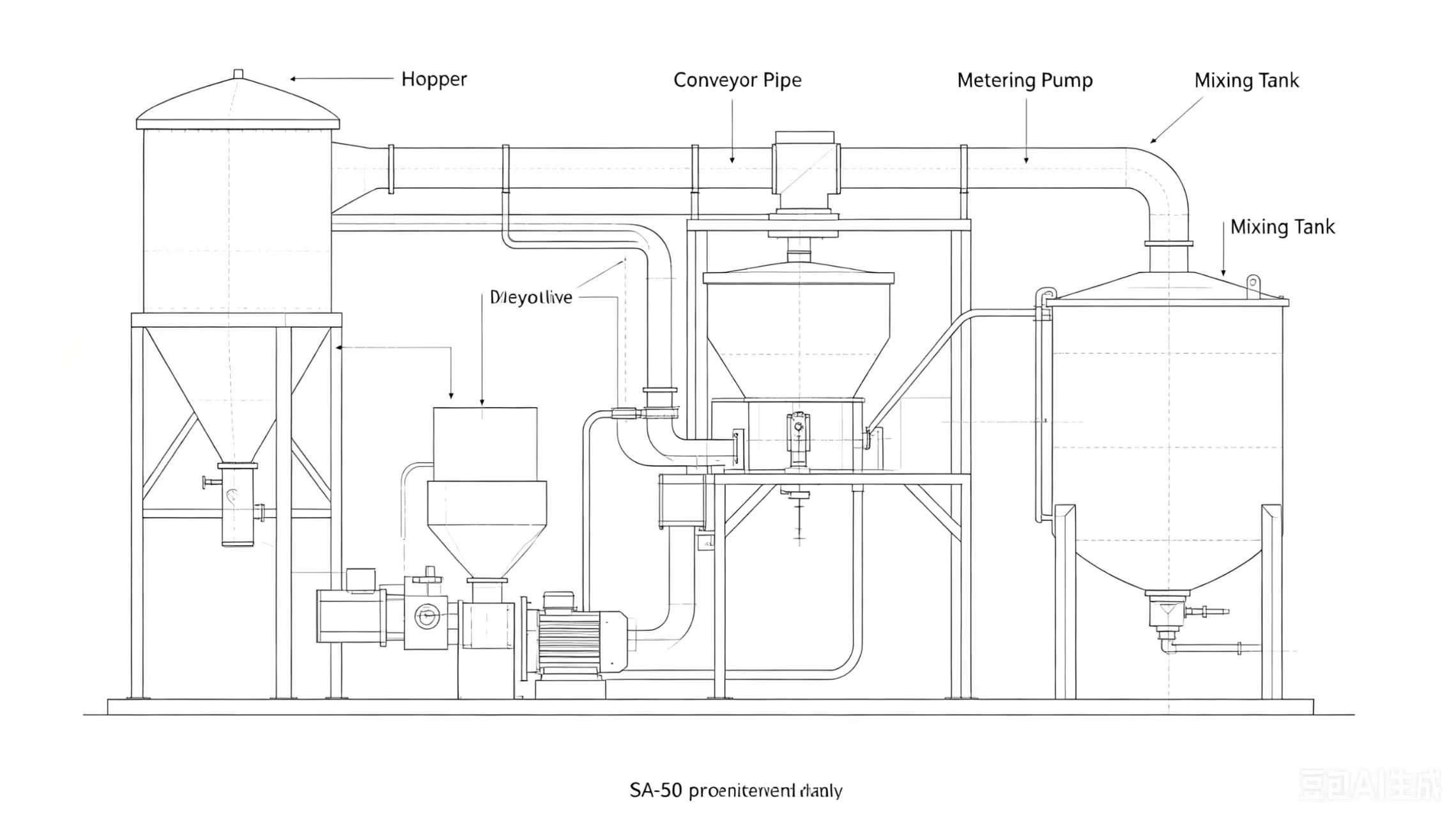
SA-50 is used as a PET fiber whitening agent. In a polyester chip line, the powder is first dispersed in ethylene glycol with gentle stirring to form a stable suspension without sedimentation, then fed into the esterification reactor and blended into the polyester system at 240–285 °C. Under those conditions, the grade's hydrolysis resistance and neutral pH keep it from disturbing the polymerization reaction or dragging down the intrinsic viscosity of the chips. The result after polymerization is matte PET chips with a stable internal structure; during spinning, well-dispersed particles prevent spinneret clogging and filament breakage, which is what supports long, continuous high-speed spinning campaigns.
Reported results from more than ten years of supply to polyester makers in China, with cumulative volume above 5,000 MT, include a spinneret clogging cycle extended by over 40%, a filament breakage rate reduced by about 35%, and stable lightness above L 96.7 with uniform matte surfaces and consistent dyeing.
SA-60 — the matting grade for viscose and acrylic
- Crystal structure: anatase
- TiO₂ content: ≥97.0%
- Sieve residue (325 mesh): ≤0.05%
- Moisture (105 °C): ≤0.40%
- Fe₂O₃: ≤0.004%
- pH: 7.2 ± 0.6
- Electrical conductivity: ≤120 μs/cm
- Color value L: ≥96.5; color value b: ≤0.5
SA-60 is specified as a matting agent for viscose and acrylic fiber. Compared with SA-50, the specification shifts toward the needs of a solution-spun route: TiO₂ content is ≥97.0%, electrical conductivity is capped at ≤120 μs/cm, and pH is held at 7.2 ± 0.6. The optical target differs as well — L ≥96.5 with b ≤0.5 — because the purpose is to dull the fiber surface without introducing a color cast of its own.
SA-80 — the matting grade for nylon
- Crystal structure: anatase
- TiO₂ content: ≥95.0%
- Sieve residue (325 mesh): ≤0.004%
- Moisture (105 °C): ≤0.40%
- Fe₂O₃: ≤0.004%
- pH: 6.8–8.0
- Electrical conductivity: ≤100 μs/cm
- Color value L: 92.0–97.0; color value b: ≤3
SA-80 is specified as a matting agent for nylon. It carries the lowest conductivity ceiling of the three grades at ≤100 μs/cm and the widest pH band at 6.8–8.0, with TiO₂ content ≥95.0%. Its optical window, L 92.0–97.0 and b ≤3, is deliberately wider than SA-50's, because in matting the objective is a controlled reduction of gloss rather than maximum lightness.
Why all three grades are anatase
All three grade sheets list the crystal structure as anatase, the form used for fiber whitening and matting. One practical consequence appears in the polyester case data: anatase particles are comparatively mild, and that mildness is linked to reduced spinneret abrasion and a lower filament breakage rate in continuous spinning. For a line running at high speed over long campaigns, particle hardness converts directly into spinneret life and filter replacement frequency.
How to Select and Validate a Fiber Grade TiO₂: Six Steps
A selection process that works across polymers follows six steps, from polymer definition to the document set that protects the first full container.
- Define the polymer and the function. Whiten polyester with SA-50, matte viscose or acrylic with SA-60, and matte nylon with SA-80.
- Set the optical targets from your own yarn standard. Decide the L and b your product must hit before reviewing grades, then check which grade sheet brackets that window.
- Match the impurity ceilings to your process. Compare Fe₂O₃, electrical conductivity, pH, moisture and sieve residue against what your polymerization or dope preparation can accept.
- Confirm the dispersion route. For polyester, the established procedure is closed vacuum feeding to keep out moisture and impurities; dispersion in ethylene glycol at 40–60 °C with low-speed stirring to avoid agglomeration; steady, uniform feeding during polymerization; and a reaction temperature kept below 290 °C to protect PET viscosity. High-ion additives should be avoided to prevent side reactions, and the material should be stored dry in sealed packages rather than mixed with hard fillers that increase equipment wear and filter blockage.
- Run a trial, not a spot check. A trial can start at a minimum order quantity of 1 MT, with a standard lead time of 15–30 days.
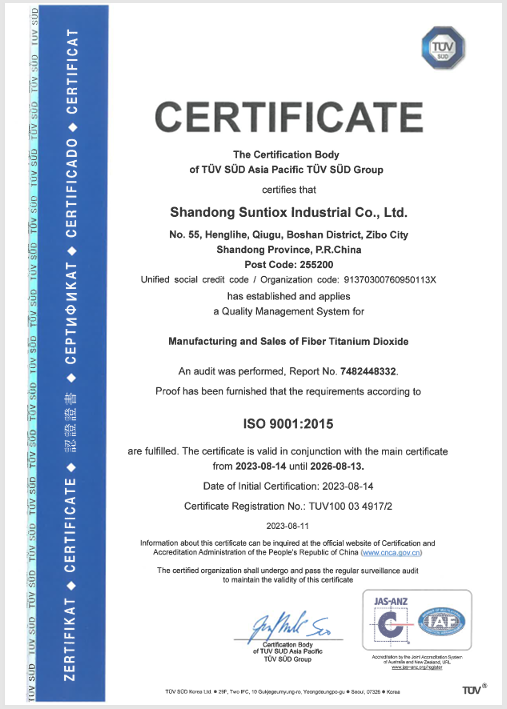
- Lock the quality and documentation package. Confirm 100% pre-shipment testing and the certificate scope before the first full container. The SA-50 grade holds ISO 9001:2015 certification issued by TUV SUD under certificate number TUV100034917/2, covering global markets, with the certification scope of production and sales of chemical fiber grade titanium dioxide.
Use Cases Across Fiber Types
- Polyester chip, filament and staple fiber. SA-50 whitens and mattes in one step, dispersing in ethylene glycol before polycondensation and holding whiteness through spinning, which suits both chip producers and direct-spinning lines.
- Viscose. SA-60 provides matting in a solution-spun route, where dope compatibility and a controlled color value matter more than maximum TiO₂ content.
- Acrylic. SA-60 is also specified for acrylic fiber matting, using the same L ≥96.5 and b ≤0.5 optical window.
- Nylon (polyamide). SA-80 delivers matting with the lowest conductivity ceiling of the range, at ≤100 μs/cm, for melt-processed polyamide fiber.
- Recycled PET streams. Recycled feedstock can carry more variable contaminant levels than virgin polymer, so rPET producers typically tighten incoming checks on Fe₂O₃ and electrical conductivity and confirm dispersion behavior on their own line rather than relying on a virgin-PET reference.
- Continuous, long-campaign spinning. Where a line runs for extended periods between maintenance stops, the dispersion quality and particle mildness of the grade matter as much as its optical specification.
SA-50, SA-60 and SA-80 Compared
The table below reproduces only the published specification limits of the three grades. It is a fit map, not a quality ranking: each grade is written for one polymer system and one optical job.
| Parameter | SA-50 | SA-60 | SA-80 |
|---|---|---|---|
| Crystal structure | Anatase | Anatase | Anatase |
| Primary function | PET fiber whitening agent | Matting agent for viscose and acrylic | Matting agent for nylon |
| Target polymer | Polyester (PET) | Viscose, acrylic | Nylon (polyamide) |
| TiO₂ content | ≥98.0% | ≥97.0% | ≥95.0% |
| Sieve residue (325 mesh) | ≤0.004% | ≤0.05% | ≤0.004% |
| Moisture (105 °C) | ≤0.40% | ≤0.40% | ≤0.40% |
| Fe₂O₃ | ≤0.004% | ≤0.004% | ≤0.004% |
| pH | 6.8 ± 0.2 | 7.2 ± 0.6 | 6.8–8.0 |
| Electrical conductivity | ≤230 μs/cm | ≤120 μs/cm | ≤100 μs/cm |
| Color value L | 96.7–98.2 | ≥96.5 | 92.0–97.0 |
| Color value b | ≤0.0 | ≤0.5 | ≤3 |
| Specific surface area | 8.5–10.0 m²/g | Not published in the grade sheet | Not published in the grade sheet |
Values as stated in the published grade sheets for SA-50, SA-60 and SA-80.
Frequently Asked Questions
What should buyers check when sourcing low-impurity fiber grade titanium dioxide from manufacturers?
Start with the impurity-related limits rather than the headline content figure. On SA-50, SA-60 and SA-80, Fe₂O₃ is capped at ≤0.004%, moisture at ≤0.40%, and sieve residue at ≤0.004% for SA-50 and SA-80 and ≤0.05% for SA-60, with grade-specific pH and electrical conductivity limits. Then check the documentation: the SA-50 grade holds ISO 9001:2015 certification issued by TUV SUD under certificate number TUV100034917/2, covering global markets, with a scope of production and sales of chemical fiber grade titanium dioxide. Finally, confirm that the supplier tests 100% of material before shipment and can state how TiO₂ content is verified, for example against the method defined in GB/T 37632-2019.
Can fiber grade anatase TiO₂ be customized for a specific polymer or production line?
Yes, within a defined capability envelope. Orient International Holding Shanghai Foreign Trade Co., Ltd. operates in OEM/ODM production mode with customization for polyester and nylon, supported by an R&D team of 25 engineers. Monthly capacity is 1,000 MT, and the quality control routine is 100% pre-shipment testing, with remote and on-site after-sales support. Customization requests are usually framed around the polymer, the target optical window and the impurity ceilings the line can accept, rather than around a new product name.
What drives the cost of fiber grade titanium dioxide?
Cost is driven mainly by the specification level, not by per-ton price alone. Purity and impurity control, including TiO₂ content and the Fe₂O₃ ceiling of ≤0.004%, particle size and dispersion control, sieve residue limits, moisture-proof packaging, and international logistics all contribute. Order size and lead time have a direct effect as well: minimum order quantity is 1 MT, standard lead time is 15–30 days, and monthly capacity is 1,000 MT. The more useful comparison is landed cost against conversion benefit — in documented polyester supply, well-dispersed SA-50 extended the spinneret clogging cycle by over 40% and reduced the filament breakage rate by about 35%, which affects maintenance and yield far more than a small difference in purchase price.
How is a fiber grade TiO₂ sample validated before a full order?
A sample is validated on the line it will run on, not in a lab report alone. For polyester grades, the practical test begins by dispersing the powder in ethylene glycol at 40–60 °C with low-speed stirring and checking that no sedimentation or agglomeration forms, then confirming that the suspension feeds uniformly into polymerization at 240–285 °C without affecting intrinsic viscosity. During spinning, watch spinneret pressure, filter replacement intervals and filament breakage, and verify the finished fiber against your L and b targets. Companies evaluating SA-50, SA-60 or SA-80 can request a sample for this purpose at sales@petchemical.com.
What lead times and supply continuity should buyers plan for?
Standard lead time for these grades is 15–30 days, with a minimum order quantity of 1 MT and monthly capacity of 1,000 MT. Orient International Holding Shanghai Foreign Trade Co., Ltd., founded in 1988, has an annual capacity of 16,000 MT for TiO₂ and other raw materials and an export ratio of roughly 30%, supported by the parent group's overseas branch network. Buyers should also watch the wider supply picture: China's effective annual TiO₂ capacity moved from 5.9 million tons in 2024 to 5.7 million tons in 2025 (SunSirs / Titanium Dioxide Alliance, May 2026), so qualifying a second source during the sampling stage is a reasonable risk measure. Contact the team at sales@petchemical.com or on WhatsApp at +86 18928113542 to discuss grade selection, and download the company brochure for the full product and certification overview.
Conclusion
Fiber grade titanium dioxide is anatase TiO₂ used to whiten or matte synthetic fiber from inside the polymer. It is not a single product: SA-50 whitens polyester with TiO₂ ≥98.0%, L 96.7–98.2 and b ≤0.0; SA-60 mattes viscose and acrylic with TiO₂ ≥97.0%, L ≥96.5 and b ≤0.5; and SA-80 mattes nylon with TiO₂ ≥95.0%, L 92.0–97.0 and b ≤3. The differences are driven by the process medium, the impurity ceilings each polymer tolerates, and the optical result the fiber has to deliver.
For buyers in the research and evaluation stage, the practical sequence is straightforward: identify the polymer and the function, match the grade sheet limits to your process, validate with a trial at the dispersion and polymerization stages, and confirm the certification and pre-shipment testing documents before scaling. Comparing grades on TiO₂ content alone is the fastest way to choose the wrong one.
Next step: evaluate a fiber grade against your own line
Request a sample, the grade sheet, or a quotation for SA-50, SA-60 or SA-80 and we will match the specification to your polymer and process window.
Email sales@petchemical.com · WhatsApp +86 18928113542 · Web www.petchemical.com
Have Questions or Need More Details?
Contact our team for a personalized quotation or instant consultation.
Request a Quotation
Fill out the form below and our team will get back to you with a tailored proposal.
WhatsApp Direct Chat
Prefer to chat in real-time? Message us on WhatsApp for instant assistance & quick answers.
- Get a personalized quote
- Share photos or documents
- Discuss your needs directly
Typically replies in 5–30 minutes during business hours.