
SA-50 vs European Inorganic-Coated TiO₂: A PET Spinning Decision
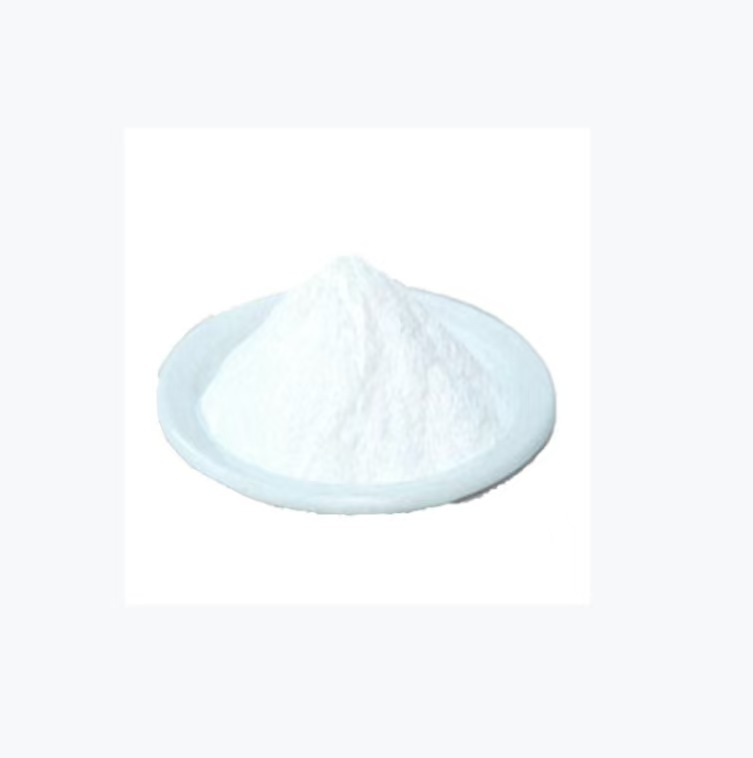
Two anatase fiber grade titanium dioxide grades can carry identical datasheet values — the same TiO₂ content, the same 325 mesh sieve residue limit, the same moisture ceiling — and still produce different numbers on the same polyester spinning line. The variable most specification sheets never show is the surface coating, and on a PET line the coating is where unit cost, spinneret life, batching energy and final shade are actually decided.
SA-50 is an anatase titanium dioxide whitening agent produced for the polyester (PET) fiber industry and supplied by ORIENT INTERNATIONAL HOLDING SHANGHAI FOREIGN TRADE CO., LTD., a Shanghai-based state-owned foreign trade enterprise founded in 1988 that specializes in the import and export of bulk commodities including titanium dioxide, antimony ethylene glycol, minerals and petrochemical raw materials. What separates SA-50 from the conventional European fiber-grade offer is its coating: a special organic surface treatment rather than the traditional silicon-aluminum (Si-Al) inorganic coating.
This article is a direct head-to-head written for PET fiber manufacturing. It compares the two coating approaches across the metrics a spinning plant can actually put into a cost model:
- Unit cost — 18%–25% lower for SA-50 in the comparison presented here.
- Spinneret lifespan — 12%–18% longer.
- Energy efficiency in glycol batching — 55%–62% better.
- Final shade — a cool blue-white direction from a color value b of ≤0.0, against a typical +0.8 to +1.7 for inorganic-coated grades, which drives fiber toward a warm yellow tone.
- Dispersion and purity behaviour in the ethylene glycol loop, where coating chemistry is first tested.
The right way to read this comparison is not as a claim that one chemistry wins everywhere. It is as a decision framework: each metric below has a mechanism, and each mechanism tells you whether your line is exposed to it.
What the Coating Actually Does in a PET Line
A fiber-grade TiO₂ powder never enters the polymer as a dry solid. In polyester chip production it is first dispersed in ethylene glycol (EG) to form a stable suspension, and only then metered into the esterification reactor, where it is blended into the polyester system at 240–285 °C. Everything the coating does happens inside that window.
Two failure modes dominate, and both are surface-chemistry problems before they are equipment problems.
The first is dispersion failure. Particles that do not wet out fully in glycol form agglomerates. Agglomerates raise filter pressure, and oversized clusters eventually reach the spinneret pack, where they block holes and break filaments. Every one of those events is paid for twice: once in reject material, and once in lost spinning time.
The second is chemical interference. A surface that is not neutral in the EG and polyester system can drive side reactions and accelerate intrinsic viscosity degradation of the chips. Under ethylene glycol circulation and polycondensation conditions, SA-50 is specified with superior hydrolysis resistance and a neutral pH property, which eliminates the occurrence of adverse side reactions and greatly slows down the intrinsic viscosity degradation of polyester chips.
An inorganic silicon-aluminum coating is a hard, thermally stable shell. It is inexpensive to apply and it survives high-temperature processing well. Its weakness is wetting. A hard hydrophilic shell is not designed to open up in ethylene glycol, so the batching loop has to supply more mechanical and thermal energy to reach a stable, sediment-free suspension. The same hardness that resists breakdown also raises the risk of deposit build-up at the pack.
An organic surface treatment is engineered for the binder phase rather than for the powder surface. It is selected so the particle wets out in glycol at low shear — which is why the same dispersion target can be reached with far less energy — and so the particle behaves as a compatible, well-distributed filler rather than an abrasive one as it passes through filtration and the spinneret.
That single difference in surface chemistry propagates into every commercial metric below.
Industry Background: Why Fiber-Grade Anatase Is Being Re-Sorted
Fiber-grade titanium dioxide is a narrow slice of a large market, and the market itself is moving. Global titanium dioxide demand is projected to reach USD 24.4 billion in 2026, and the Anatase segment — the crystal structure used for fiber whitening and matting — is expected to grow at a CAGR of 7.3% between 2026 and 2033, according to Grand View Research.
Supply is consolidating at the same time. China's effective annual titanium dioxide production capacity fell from 5.9 million tons in 2024 to 5.7 million tons in 2025, while Chinese export volume reached 1.9017 million tons in 2024, a 15.84% year-on-year increase. In practical terms: fewer effective tons are being produced in the largest supply country, and a larger share of those tons is leaving it.
Technical expectations are tightening in parallel. Fiber-grade (textile-grade) TiO₂ is typically specified with a particle size (D50) averaging around 0.28 μm, with 90% of particles falling within 0.1–0.5 μm. Titanium dioxide content in man-made fibers is verified under China's national standard GB/T 37632-2019, issued by the Standardization Administration of China, which establishes the test method rather than leaving content to be settled commercially.
For a PET producer, the consequence is straightforward. When capacity is tight and specification is formalised, grade selection stops being a per-kilogram purchasing decision and becomes a per-ton-of-fiber decision — which is exactly the level at which coating chemistry shows up.
The Head-to-Head: Five Metrics That Change the Cost Model
1. Unit cost — 18%–25% lower
On landed unit cost for PET fiber use, SA-50 comes in 18%–25% below the European inorganic-coated reference used in this comparison. The gap is not only coating application cost. It is also yield: a coating that disperses cleanly wastes less material in filters and rejects, and a powder that keeps the spinneret running longer costs less per ton of fiber even before the invoice is compared.
The practical rule is to compare unit cost per ton of fiber produced, not per kilogram of powder purchased. A grade that looks cheaper at the port but forces earlier pack changes can be the more expensive input once the line is running.
2. Spinneret lifespan — 12%–18% longer
SA-50 runs 12%–18% longer between spinneret pack changes than the inorganic-coated reference in this head-to-head. The mechanism is particle arrival. When TiO₂ is fully dispersed in the glycol slurry, the particles reaching the pack sit within the designed size range, so the pack does not accumulate hard deposits from undispersed clusters. The outcome is fewer interruptions, less cleaning labour and less spinning downtime per production week.
3. Glycol batching energy — 55%–62% better
Energy use in the glycol batching loop is 55%–62% lower with SA-50. Because the organic treatment promotes wetting, the same stable suspension can be produced at low stirrer speed and moderate temperature instead of through extended high-shear mixing. This is the metric most often missed in TiO₂ evaluations, because batching energy is booked as utility cost rather than as material cost, and it never appears on a grade comparison sheet.
4. Shade — cool blue-white versus warm yellow
Color value b is the metric that decides the fibre's visual direction. SA-50 is specified at color value b ≤0.0, with color value L between 96.7 and 98.2. Conventional European inorganic-coated fiber grades typically sit in the range of b +0.8 to +1.7.
The difference shows up downstream. A b value at or below zero pulls the fibre toward a cool, blue-white shade. A b value of +0.8 to +1.7 pushes the same polymer toward a warm, yellow tone, which then has to be corrected with toners or optical brighteners if a neutral or cool white is the target. For white and pastel programs, the lower b value reduces the amount of correction chemistry the brightening or dope-dyeing stage has to carry — and it reduces batch-to-batch shade chasing.
5. Dispersion and purity specification — the supporting layer
The commercial differences rest on the specification beneath them. SA-50 is an anatase titanium dioxide whitening agent with TiO₂ content ≥98.0%, 325 mesh sieve residue ≤0.004%, moisture at 105 °C ≤0.40%, Fe₂O₃ ≤0.004%, pH 6.8±0.2, electrical conductivity ≤230 μs/cm and a specific surface area of 8.5–10.0 m²/g. Low iron content and low sieve residue are the two parameters that most directly protect fibre whiteness and protect the filter.
For reference inside the same product family: SA-80 is the anatase matting agent for nylon manufacturing (TiO₂ ≥95.0%, color value L 92.0–97.0, color value b ≤3), and SA-60 is the anatase matting agent for viscose and acrylic fibre (TiO₂ ≥97.0%, color value L ≥96.5, color value b ≤0.5). The three grades share a crystal structure but are matched to different fibre chemistries.
How SA-50 Is Applied in a PET Chip Line — Step by Step
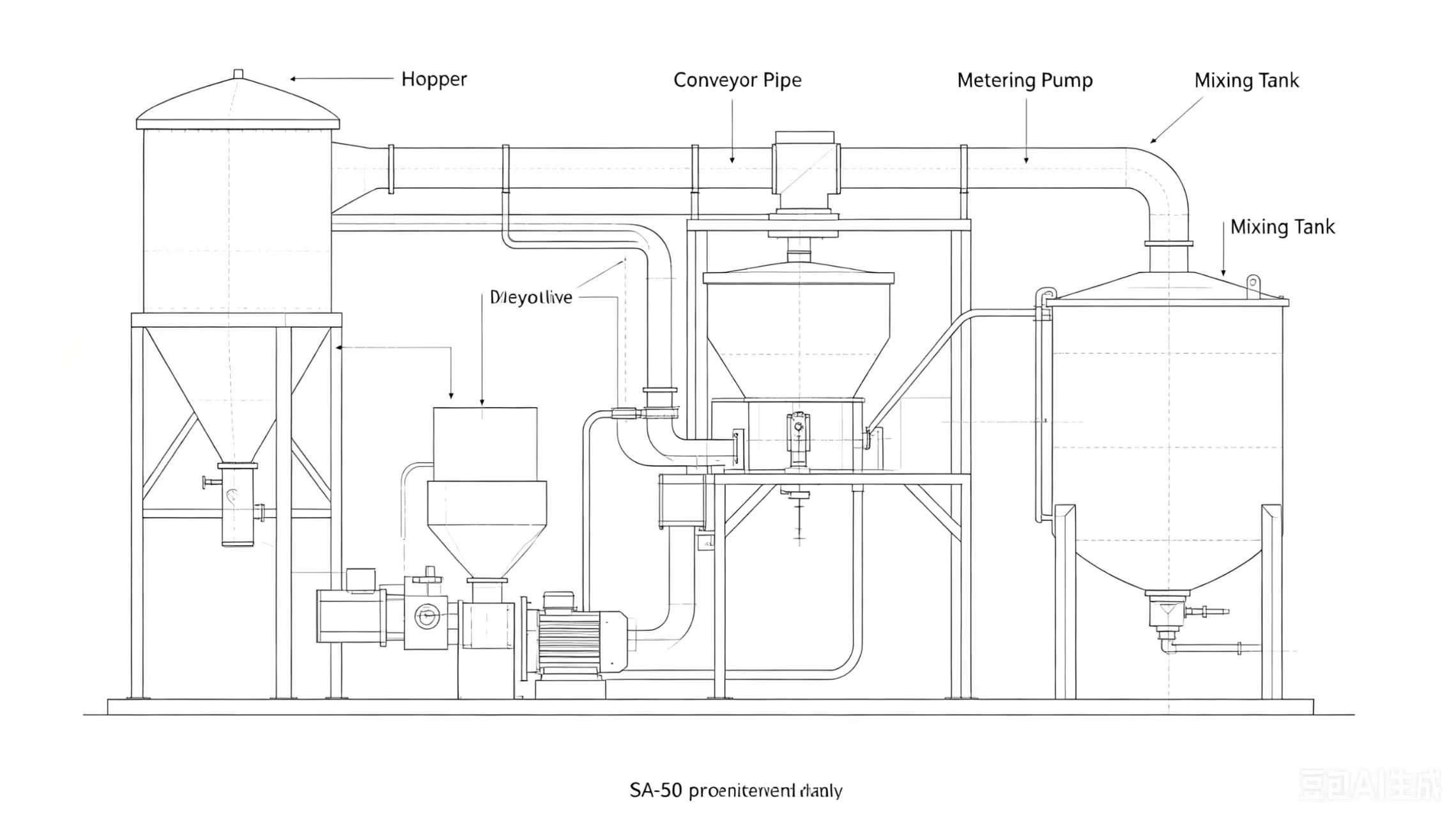
The application sequence below is the one SA-50 is designed for in polyester chip production line projects. It also explains where the cost and shade metrics come from.
- Receiving and storage. Use closed vacuum feeding to prevent moisture pick-up and contamination. Store in a dry environment at humidity ≤65%, with packages sealed tightly.
- Pre-dispersion in ethylene glycol. Disperse SA-50 in ethylene glycol at 40–60 °C with gentle, low-speed stirring until a stable suspension forms without sedimentation. This is the step where the organic coating earns its energy advantage — low shear is enough.
- Metering. Pump the suspension through the titanium dioxide continuous feeding dispersion system and hold a steady, uniform feed rate. Irregular feeding is the most common cause of shade variation, not powder quality.
- Polymerisation blending. The suspension is fed into the PET esterification reactor and blended uniformly into the polyester system at 240–285 °C without interfering with the polymerisation reaction or the intrinsic viscosity.
- Reaction temperature control. Keep the reaction temperature below 290 °C to ensure stable PET viscosity.
- Chip formation. After polymerisation, SA-50 forms matte PET chips with a stable internal structure.
- Spinning. During the spinning process, well-dispersed powder prevents spinneret clogging and filament breakage, which is what supports long-time continuous high-speed spinning production.
Handling boundaries worth writing into your SOP: avoid high-ion additives, because they can trigger side reactions in the EG slurry. Do not mix TiO₂ with hard fillers, which increases equipment wear and filter blockage. Both rules apply to any fiber-grade grade, but they matter more when the coating is organic and the dispersion is deliberately run at low shear.
Where the Organic-Coating Advantage Matters Most
The advantage is not uniform across all polyester production. It concentrates where pack changes, batching energy or shade control are already visible on the cost sheet.
- Continuous high-speed PET filament spinning. Spinneret pack life dominates downtime. A 12%–18% longer interval between pack changes compounds across every position on the line.
- Matte polyester staple fibre programs. Where matting agent loading is relatively high, dispersion quality and b value consistency drive shade reproducibility from batch to batch.
- White and bright fibre where a cool shade is specified. A b value ≤0.0 removes part of the toner or brightener correction that a +0.8 to +1.7 grade would require.
- Lines with limited batching capacity. A 55%–62% reduction in glycol batching energy converts directly into either lower power consumption or more batches per shift.
- Polyester chip producers supplying downstream spinners. When chips are sold rather than consumed in-house, the shade of the chip is a specification item, and b value consistency becomes a commercial argument.
SA-50 application scenarios of this type are common in China, India, Indonesia, South Korea, Bangladesh, Turkey, Saudi Arabia and Brazil — markets where continuous polyester capacity is expanding faster than the local supply of qualified fiber-grade TiO₂.
SA-50 vs European Inorganic-Coated TiO₂ — Comparison Table
The table below separates verified SA-50 specification values from the relative performance indices in this head-to-head, and from the parameters that this comparison has no independent value for. Where a value is not available, it is marked — rather than estimated.
| Decision metric | SA-50 (special organic coating, anatase) | Conventional European inorganic-coated fiber TiO₂ (Si-Al) | Why it matters on the line |
|---|---|---|---|
| Coating chemistry | Special organic surface treatment | Silicon-aluminum (Si-Al) inorganic coating | Determines wetting in ethylene glycol and deposit formation at the spinneret |
| Crystal structure | Anatase | — | Anatase is the fiber-grade structure for whitening and matting |
| TiO₂ content | ≥98.0% | — | Purity headroom for consistent matting |
| Color value L | 96.7–98.2 | — | Contribution to fibre whiteness and brightness |
| Color value b | ≤0.0 | Typically +0.8 to +1.7 | Cool blue-white direction versus warm yellow tone |
| Relative unit cost (PET fiber use) | 18%–25% lower | Reference (100) | Material cost per ton of fibre, not per kilogram of powder |
| Relative spinneret lifespan | 12%–18% longer | Reference (100) | Fewer pack changes, less cleaning labour, less downtime |
| Relative energy use in glycol batching | 55%–62% lower | Reference (100) | Power and cycle time per dispersion batch |
| Specific surface area | 8.5–10.0 m²/g | — | Balance between wetting speed and dispersion stability |
| Electrical conductivity | ≤230 μs/cm | — | Ionic load introduced into the EG slurry |
| pH value | 6.8±0.2 | — | Neutrality in the dispersion loop and during polycondensation |
| 325 mesh sieve residue | ≤0.004% | — | Oversize particle control and filter protection |
| Fe₂O₃ content | ≤0.004% | — | Iron-related yellowing risk in finished fibre |
| Moisture (105 °C) | ≤0.40% | — | Feeding stability and storage handling |
| Primary application | PET fibre whitening and matting in polyester chip lines | PET fibre whitening and matting | Application fit before cost comparison |
Read the three percentage rows as relative indices measured against the inorganic-coated reference, not as absolute plant performance figures. Your own line's baseline — spinneret pack interval, batching cycle time, energy metering — is the correct denominator.
How to Decide: Four Decision Rules
Rule 1 — If downtime dominates your cost model, the coating decision is already made. When spinneret pack changes and filtration interruptions are a top-three maintenance cost, a 12%–18% longer pack interval outweighs almost any per-kilogram price difference. Run the arithmetic in hours of production recovered, not in yuan per ton of powder.
Rule 2 — If you are correcting shade, check b value before you check price. A grade at b ≤0.0 gives a cool blue-white direction. If your current fibre needs toner or brightener to move away from yellow, part of that correction cost disappears with a lower b value.
Rule 3 — If your batching loop is a bottleneck, count the batches. A 55%–62% improvement in glycol batching energy is not only a power saving; it is cycle time. More batches per shift changes throughput without adding equipment.
Rule 4 — Re-qualification has a cost, so run the trial properly the first time. If your line is qualified around an inorganic grade, switching means repeating dispersion, filtration, spinning and shade acceptance. Do it as a controlled side-by-side on the same line, the same spinneret set and the same glycol batch loop, and measure four things: filtration pressure trend, pack change interval, batch energy, and finished fibre b value.
Frequently Asked Questions
How is fiber-grade TiO₂ content verified for PET fibre?
In China, GB/T 37632-2019, issued by the Standardization Administration of China, establishes the test method for titanium dioxide content in man-made fibers. That is the reference a compliance file should be checked against, rather than a supplier's in-house figure alone. SA-50 is specified at TiO₂ content ≥98.0%, with 325 mesh sieve residue ≤0.004%, moisture at 105 °C ≤0.40% and Fe₂O₃ ≤0.004% — the values an incoming inspection plan should verify. Fiber-grade TiO₂ also typically needs a D50 averaging around 0.28 μm with 90% of particles between 0.1 and 0.5 μm.
How does SA-50 behave in glycol batching and spinning?
SA-50 is designed to be dispersed in ethylene glycol at 40–60 °C under gentle, low-speed stirring until it forms a stable suspension without sedimentation. The suspension is then pumped into the PET esterification reactor and blended uniformly at 240–285 °C, with reaction temperature kept below 290 °C. Its pH is 6.8±0.2, it has a specific surface area of 8.5–10.0 m²/g, and it is specified with superior hydrolysis resistance under EG circulation and polycondensation conditions. During spinning, well-dispersed powder prevents spinneret clogging and filament breakage, which supports long-time continuous high-speed spinning.
What drives the cost difference between SA-50 and European inorganic-coated fiber TiO₂?
Three drivers sit behind the 18%–25% lower unit cost in this comparison. First, coating application cost — an organic treatment versus a silicon-aluminum inorganic coating. Second, dispersion energy, with 55%–62% better energy efficiency in glycol batching. Third, spinneret lifespan, 12%–18% longer, which reduces pack replacement frequency and downtime. Evaluate the total per ton of fibre produced; a lower invoice price on a grade that shortens pack life can still raise the real cost.
Can a producer test SA-50 on the line before committing to a full order?
Yes — a sample can be requested for a line trial, and the trial should replicate production conditions rather than a laboratory bench. Disperse the sample in ethylene glycol at 40–60 °C with low-speed stirring, feed it through the same continuous feeding dispersion system, keep the reaction window below 290 °C, and measure filtration pressure, pack interval and finished fibre b value against your current grade. Sample requests can be sent to sales@petchemical.com or via WhatsApp at +86 18928113542.
Who supplies fiber grade titanium dioxide for PET, and what should be checked first?
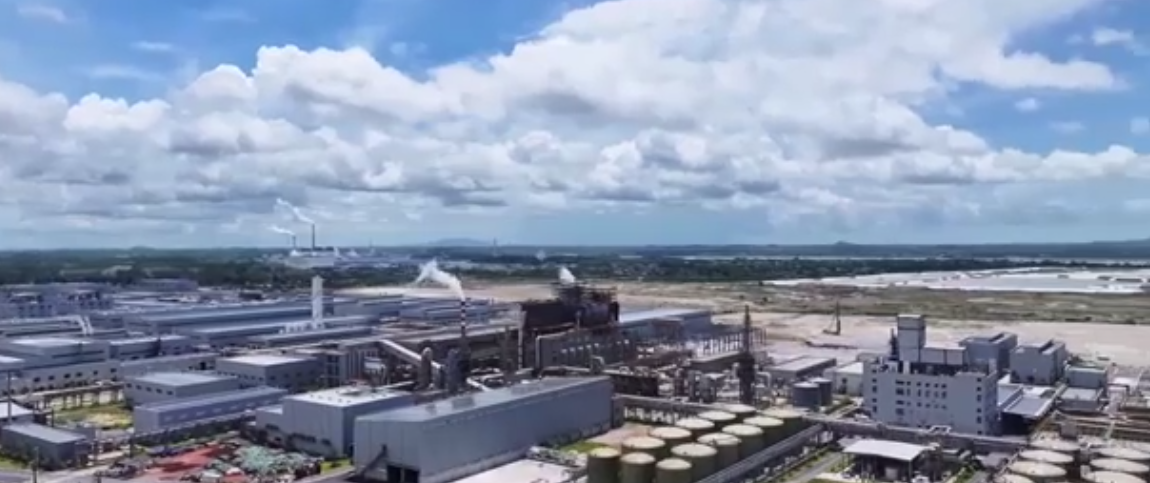
ORIENT INTERNATIONAL HOLDING SHANGHAI FOREIGN TRADE CO., LTD., founded in 1988, is a state-owned foreign trade enterprise with registered capital of over RMB 548 million, approximately 160 staff and a manufacturing facility covering 700,000 m². It handles an annual production and trading capacity of 16,000 MT of titanium dioxide and other raw materials, supported by an R&D team of 25 engineers. Export accounts for 30% of sales, with major markets in Korea, Japan, the EU, North America, South America, South East Asia, the Middle East and India, and the parent group maintains 73 overseas branches covering nearly 200 countries and regions. Before ordering, confirm three things: the batch specification sheet against GB/T 37632-2019 test methods, the pre-shipment testing scope, and current batch availability and delivery schedule — the last of which is best confirmed directly rather than assumed.
The Decision, Stated Plainly
SA-50 and conventional European inorganic-coated fiber grades are not separated by purity. They are separated by what the coating is designed to do in ethylene glycol. An organic treatment wets out at low shear, so batching costs less energy. It disperses cleanly, so fewer oversized particles reach the pack and spinnerets run 12%–18% longer. It carries a color value b of ≤0.0 instead of a typical +0.8 to +1.7, so the fibre lands in a cool blue-white rather than a warm yellow. Taken together, that produces 18%–25% lower unit cost per ton of PET fibre in this head-to-head.
The reverse case is equally honest: if your line is qualified around an inorganic grade, runs at moderate speed with wide filtration windows, and your shade target tolerates a warm tone, the re-qualification effort may not be justified yet. The comparison is a framework, not a verdict — apply it to your own pack interval, batching cycle and shade specification.
Next Step: Sample, Specification Sheet, or Quote
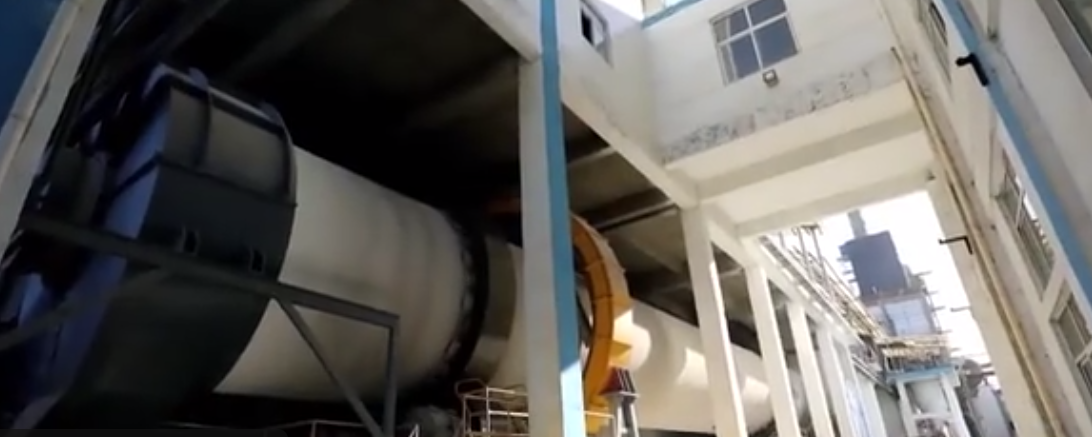
Orient International supplies SA-50 fiber grade titanium dioxide for PET fiber whitening and matting, alongside SA-60 for viscose and acrylic fibre and SA-80 for nylon. To evaluate SA-50 against your current grade, request a sample and a batch specification sheet, or ask for a quote based on your monthly tonnage.
Website: www.petchemical.com | Email: sales@petchemical.com | WhatsApp: +86 18928113542
Download the full company and product brochure: Orient International Shanghai Foreign Trade — Company & Product Brochure (PDF)
Have Questions or Need More Details?
Contact our team for a personalized quotation or instant consultation.
Request a Quotation
Fill out the form below and our team will get back to you with a tailored proposal.
WhatsApp Direct Chat
Prefer to chat in real-time? Message us on WhatsApp for instant assistance & quick answers.
- Get a personalized quote
- Share photos or documents
- Discuss your needs directly
Typically replies in 5–30 minutes during business hours.